AFRICANA ENTERPRISE USA supports you in your trade and investment projects, whatever their form:
Export, Import, Business Representation, Translation and Negotiation
New sites, extensions, industrial or technological partnerships, acquisitions or financial investments
BE SMART : CHOOSE MOROCCO !
Each of Morocco’s 12 regions also leads its own investment promotion efforts through Regional Investment Centers (CRIs)
Favorite Investment Destination: Made in Morocco
Morocco’s strategic location at the crossroads of Africa, Europe, and the Middle East makes it an ideal hub for trade, supply chain diversification, and business investment. Morocco is a competitive exporting hub in the region of Euro-African jonction. Moroccan economy offers competitive production costs and global access to strategic peripheral and neighboring markets. Morocco is also an African leader in the transition to a green economy. Morocco’s focus on renewable energy and inclusive free trade agreements makes it attractive to investors looking for innovation and future growth. In 2022, net FDI inflows reached 20.97 billion dirhams ($2 billion), an increase of 8.3 percent compared to the previous year.
★★★
Morocco has ratified 72 investment treaties for the promotion and protection of investments and 62 economic agreements – including with the United States and most EU nations – that aim to eliminate the double taxation of income or gains. Morocco is the only country on the African continent with a Free Trade Agreement (FTA) with the United States, eliminating tariffs on more than 95 percent of qualifying consumer and industrial goods. ★ ★ ★ ★ ★
★ ★★
★ Foreign Investment and Foreign Trade ★
Morocco has ratified 72 investment treaties for the promotion and protection of investments and 62 economic agreements – including with the United States and most EU nations – that aim to eliminate the double taxation of income or gains. Morocco is the only country on the African continent with a Free Trade Agreement (FTA) with the United States, eliminating tariffs on more than 95 percent of qualifying consumer and industrial goods. ★ ★ ★ ★ ★
Dr. Said El Mansour Cherkaoui Promoting Moroccan-US Trade, Business and Cultural Relationships
Morocco has the ambition to position itself as an essential export platform for investors wishing to target dynamic markets with high growth potential in Northern and Southern Europe, in Africa, in the vicinity of the Middle East, and in the United States of America, and the Asian nations with whom a trade relationship has been re-established since the independence of the Moroccan Kingdom.
Morocco indeed stands out as a strategic and competitive exporting hub in the region including the following key strengths:
Competitive Production Costs:
Morocco boasts competitive production costs, making it an attractive destination for businesses. Its labor cost efficiency, coupled with a young population (42% under 25 years old), contributes to this advantage.
The country’s automotive sector exemplifies this competitiveness. With 220,000 employed in the automotive industry, Morocco is the world’s fastest-growing automotive cluster. It leads Africa in passenger car manufacturing, producing nine different models (including two electric ones) with a total capacity of 700,000 cars1.
Tailor-made training modules ensure a steady supply of highly qualified workers, ready to meet investors’ demands.
Global Access to Strategic Markets:
Geographically, Morocco is strategically positioned at the crossroads of Europe, Africa, and the Middle East, standing with just 14 km from Europe, providing easy access to key markets.
The country has free trade agreements (FTAs) with over 50 countries, facilitating trade and investment. These agreements enhance Morocco’s role as a global supply chain hub.
Its logistical advantage attracts companies seeking efficient access to Europe, the Middle East, and Africa2.
Green Economy Transition:
Under the guidance of King Mohammed VI, Morocco is transitioning toward a green economy. The country aims to become one of the greenest and lowest-carbon platforms globally.
Renewable energies play a significant role, with a target of 52% energy production capacity from renewables by 2030. This commitment aligns with global climate goals 3.
Morocco Attracts Foreign Direct Investment
Morocco’s combination of competitive costs, global market access, and sustainability initiatives positions it as an attractive destination for foreign investment and industrial projects. Morocco’s pro-business policies, tax incentives, and commitment to infrastructure development make it an attractive destination for foreign investment. The government’s efforts aim to create a conducive environment for economic growth and job creation.
The Moroccan government actively encourages foreign investment through various policies and initiatives that are offered as support to foreign investors
Investment Promotion Agencies:
Morocco has established agencies like the Moroccan Investment Development Agency (AMDI) and the Moroccan Agency for Solar Energy (MASEN). These agencies provide information, guidance, and incentives to foreign investors.
AMDI assists investors in setting up their businesses, obtaining permits, and navigating legal requirements. MASEN focuses on renewable energy projects.
Free Trade Zones and Industrial Parks:
Morocco offers free trade zones (such as the Tangier Free Zone) and industrial parks (like Casablanca’s Midparc) with tax incentives, streamlined procedures, and infrastructure.
These zones attract foreign companies by providing a favorable business environment.
Tax Incentives and Exemptions:
The government provides tax breaks for specific sectors, such as renewable energy, export-oriented industries, and tourism.
Foreign investors may benefit from reduced corporate tax rates, exemptions on dividends, and customs duties.
Investment Guarantees and Protection:
Morocco has bilateral investment treaties (BITs) with several countries, ensuring protection against expropriation and guaranteeing fair treatment.
The government also offers investment insurance through the Moroccan Investment Insurance Company (MIGA).
Infrastructure Development:
The government invests in infrastructure projects: ports, roads, railways, and airports. This enhances connectivity and logistics for businesses.
Sector-Specific Support:
For specific sectors like renewable energy, the government provides incentives, auctions, and long-term power purchase agreements (PPAs).
In agriculture, there are programs to improve irrigation, promote organic farming, and support agribusiness.
Simplified Procedures:
The government has simplified administrative procedures for business registration, permits, and licenses.
The Single Window for Investment (Guichet Unique) streamlines processes for investors.
Skilled Workforce Development:
Morocco invests in education and vocational training to develop a skilled workforce.
Foreign investors benefit from a pool of qualified professionals.
Strategic Sectors:
The government identifies strategic sectors (such as automotive, aerospace, and textiles) and provides targeted support.
For example, the Tanger Med Port is a hub for automotive manufacturing and exports.
Public-Private Partnerships (PPPs):
The government collaborates with private entities in infrastructure projects, creating opportunities for foreign investors.
« La dynamique d’investissement, la relance économique et la création d’emploi doivent être accompagnées par des CRI 3.0 plus proches des investisseurs, plus forts et mieux dotés afin qu’ils supervisent l’intégralité du processus d’investissement et qu’ils en accroissent l’efficience, conformément aux Hautes Orientations de Sa Majesté Le Roi Que Dieu L’assiste. » Mohcine Jazouli
Ce nouveau palier de la réforme doit permettre de consolider leur positionnement, d’accélérer la croissance économique et de dynamiser la création d’emplois au niveau des territoires.
Invest in Morocco: Where Vision Creates Opportunities – Where Culture, History, and Present Progress Are the Driving Forces of Change and Development. The rich cultural heritage, historical significance, and ongoing progress catalyze positive change and sustainable development.
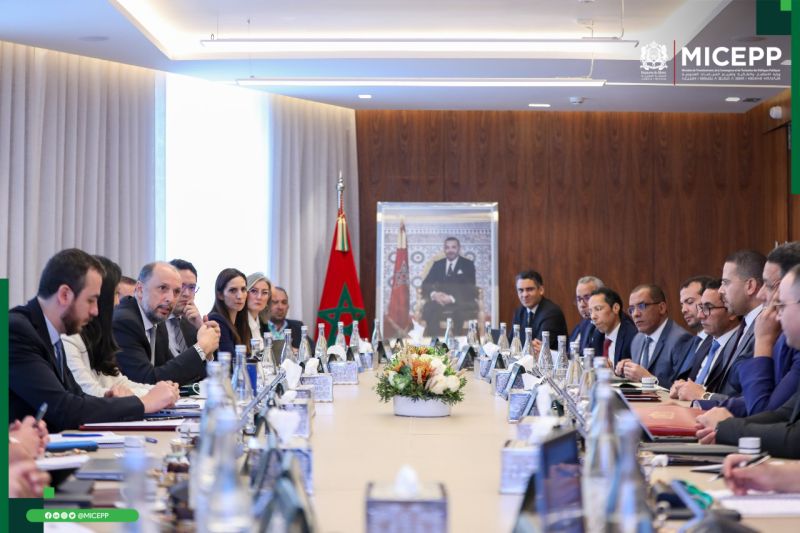
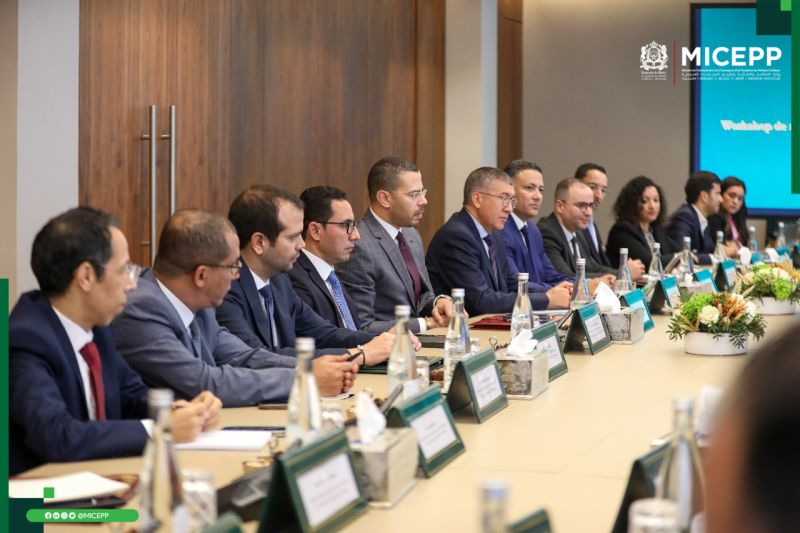
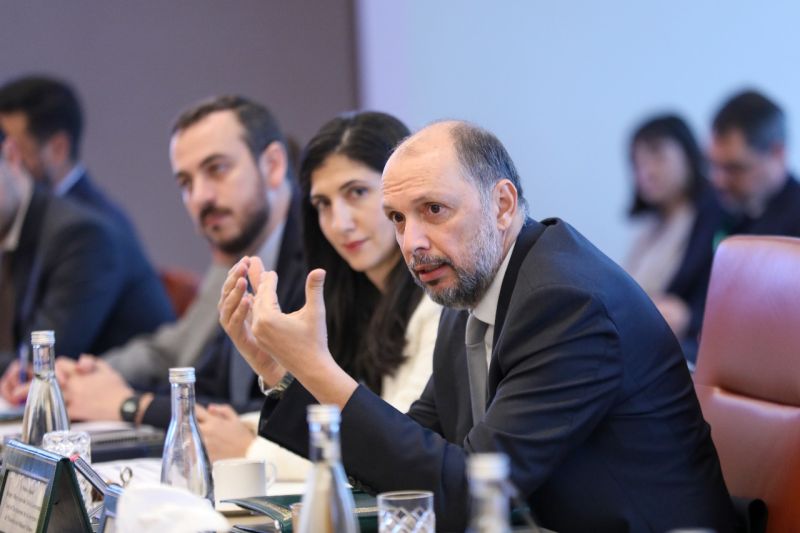
Moroccans Meeting in the United States of America – Said El Mansour Cherkaoui Welcoming His Excellency Si Mohcine Jazouli, the Minister of Investment, Convergence and Evaluation of Public Policies declaring:
« Thrilled to have convened an inspiring gathering in Silicon Valley, bringing together Moroccan professionals from diverse sectors. Proud of such a dynamic community and excited for the future collaborations ahead !»
★
Morocco’s Investment and Export Development Agency (AMDIE) ★ is the national agency responsible for the development and promotion of investments and exports. Following the reform to the law governing the country’s Regional Investment Centers (CRIs) in 2019, each of the 12 regions is empowered to lead their own investment promotion efforts. The CRI websites aggregate relevant information for interested investors and include investment maps, procedures for creating a business, production costs, applicable laws and regulations, and general business climate information, among other investment services.
★ Foreign Investment and Foreign Trade ★ Morocco has ratified 72 investment treaties for the promotion and protection of investments and 62 economic agreements – including with the United States and most EU nations – that aim to eliminate the double taxation of income or gains. Morocco is the only country on the African continent with a Free Trade Agreement (FTA) with the United States, eliminating tariffs on more than 95 percent of qualifying consumer and industrial goods.
★
Morocco has been successful in attracting foreign direct investments (FDI) across various sectors. Here are some notable examples
Renewable Energy Projects: Morocco has secured significant FDI in renewable energy. For instance:
Total Eren (Luxembourg) plans to construct a hydrogen and green ammonia production facility in Morocco with an investment exceeding USD 10 billion.
Chinese companies, especially in the electric vehicle supply chain, have contributed to Morocco’s surge in greenfield FDI. Notable projects include Gotion High-Tech’s gigafactory and Huayou Cobalt’s electric vehicle battery components factory.
Automotive and Aerospace Industry:
Morocco’s automotive sector has attracted substantial investments. The country is the world’s fastest-growing automotive cluster and leads Africa in passenger car manufacturing. Foreign automakers have established production facilities in cities like Tangier.
The aerospace industry has also seen growth, with companies like Bombardier and Safran investing in Morocco.
Tourism and Real Estate:
FDI in tourism and real estate has been significant. Morocco’s rich cultural heritage, beautiful landscapes, and strategic location attract investors.
Hotel chains, resorts, and luxury properties have been developed with foreign investment.
Textile and Apparel Industry:
Morocco’s textile and apparel sector benefits from FDI. The country is known for its quality textiles, and foreign companies have set up production units.
Financial Services and Banking:
Foreign banks and financial institutions have invested in Morocco’s banking sector. The country’s stable currency and political framework make it an attractive destination.
Infrastructure and Logistics:
Investments in ports, roads, and logistics infrastructure enhance Morocco’s connectivity. The Tanger Med Port is a hub for automotive exports.
Agribusiness and Food Processing:
FDI in agriculture, food processing, and export-oriented agribusiness contributes to Morocco’s economic growth.
Mining and Energy:
Morocco has attracted investments in mining (such as phosphates) and renewable energy (solar and wind projects).
Education and Technology:
Foreign investors have shown interest in education, especially in setting up international schools and universities.
The government encourages technology investments, aiming to position Morocco as a regional tech hub.
Industrial Acceleration Plan and Economic Modernization:
The Moroccan government’s Industrial Acceleration Plan has facilitated FDI by creating industrial systems and promoting partnerships.
The second phase (2021-2025) focuses on consolidating achievements and integrating small and medium enterprises.
Automotive Industry in Morocco par Said El Mansour Cherkaoui:
The country in northwest Africa is bordered by the Strait of Gibraltar and the Mediterranean Sea in the north, by Mauritania in the south, by Algeria in the east, and in the west by the Atlantic Ocean.
Political Environment:
By Article I of the 2011 Constitution, Morocco is a constitutional, democratic, parliamentary and social monarchy:
The king is the Head of State of Morocco, the Supreme Representative of the nation, the symbol of its unity, and the guarantor of the permanence and continuity of the State. His Majesty presents also the Supreme Arbiter between the Institutions and appoints the Head of Government from the political party with a majority of seats to act in the Chamber of Representatives.
The parliament which is composed of two chambers (the Chamber of Representatives and the Chamber of Councillors) exercises the legislative power in the Kingdom, votes on laws, controls the activities of the Government, and evaluates public policy.
Economic Overview:
The Moroccan economy is characterized by a great openness to the outside world. Since the early 80s, Morocco has adopted an economic and financial openness policy aiming at improving the liberalization of foreign trade, the largest integration of the Moroccan economy into the international economy, and at strengthening of contribution to the consolidation of a multilateral trading system.
In this regard, significant advances in the modernization of economic and financial structures and upgrading of the legal and institutional frameworks have been accomplished. The aim is to permanently accelerate economic growth in Morocco and to improve the living conditions of its citizens.
Trade Policy and Investment Charter
In this context, Morocco undertook the simplification of foreign trade procedures, a reduction in tariff protection, the elimination of non-tariff measures, the improvement of the business and investment environment, the expansion and the diversification of economic and trade relations and finally, regular contributions to consolidate the multilateral trading system. This opening is further illustrated by the signing of various free-trade agreements by the Kingdom with its main economic partners, including the European Union, the United States, and in both Arab and African countries. In addition, a set of legal texts were enacted or modified to support these reforms. These include, for example, the Investment Charter, the Commercial Code, the law establishing the commercial courts, the Customs Code, the Law on free pricing and competition, the regulation of the State’s markets, and the Law on the protection of industrial and commercial property.
Moreover, the establishment of new sector policies based on comparative advantages of the Moroccan economy (Industrial Acceleration Plan 2014-2020, Vision 2020 for Tourism, Vision 2015 for the Craft Industry, Rawaj Plan for Trade 2020, the Green Morocco Plan for Agriculture, Halieutis Plan for Fishing. etc) should promote, in the coming years, a sustained and sustainable growth.
In order to support these sectoral strategies and strengthen long-term growth, Morocco has initiated several strategies relating to infrastructure and logistics:
Presentation of the Subsidies, Financing Plans and Tax Benefits for Investments Realized in Morocco
With regards to the financing of investments, Morocco has subsidy funds, the Kingdom also provides financing plans and grants tax advantages. A non-exhaustive list is presented below:
Industrial Development and Investment Fund (FDII): Companies can benefit from a subsidy for tangible and intangible investment that can be up to 30% of the investment’s amount excluding taxes;
Morocco PME: ISTITMAR CROISSANCE program for VSEs: Support for extension and diversification projects that can reach 30% of the investment’s amount capped at 2 Mn MAD, for very small businesses having achieved or forecasted a turnover less than or equal to 10 Mn MAD.
IMTIAZ CROISSANCE program for SMEs: support for extension and diversification projects that can be up to 20% of the investment program, capped at 10 Mn MAD, for small businesses that carried out or forecasted turnover does not exceed 200Mn MAD.
Investment Promotion Fund (FPI): This fund manages the operations relating to the assumption of certain advantages by the Government granted to companies whose investments respect the conditions outlined in the investment charter:
Support for acquiring land in specific areas up to 20% of the purchase cost.
Participation in external infrastructure expenses up to a limit of 5% of the investment program’s total amount.
Contribution to training costs up to a limit of 20% of the incurred expenses.
Finishing, Printing, Dyeing Fund (FIT): This fund grants a 20% premium on equipment investment dedicated to upstream textile projects.
“IDMAJ” program: This program aims to promote recruiting young graduates by granting companies offering a first professional experience the exemption from social contributions and payroll taxes.
“TAEHIL” program: This program offers training to future hired employees and job seekers in order to adjust their profiles to the specificities of the position to be filled and to the market’s requirements.
“INMAA” program: This program aims to improve the industrial performance and the competitiveness of Moroccan industries by providing their teams with training and support in Lean management for the implementation of Lean tools. The cost of this service can be subsidized up to 60% through the MOUSSANADA program.
Value Added Tax (VAT) exemption5: Companies established in Morocco can benefit from the exemption or reimbursement of the VAT provided for by the Moroccan Tax Code, in the event of:
Local acquisition of import of investment goods within the limit of 36 months starting from the beginning of the company’s activity.
Import of the capital goods, materials, and tools necessary for the completion of investment projects undertaken within the framework of an agreement concluded with the State under certain conditions.
Existence of a VAT credit arising from the acquisition of certain investment goods that could not be absorbed by the collected tax.
Corporate Income Tax (CIT) exemption: Industrial companies operating in activities included in the list provided for by the Government benefit from the advantages below:
Total exemption from CIT for the first five consecutive fiscal years starting from the date the company starts operating.
Application of a reduced tax rate of 28% to the local turnover carried out by industrial companies specialized in manufacturing or transforming tangible personal property and which tax result is less than MAD 100M (Approximately EUR 9M) check the current rate of exchange and new tax.
Professional tax: Companies established in Morocco exercising a professional, industrial, or commercial activity benefit from the exemption from professional tax during the first 5 years of operation7. The aforementioned exemption also applies, for the same duration, to lands, buildings of any kind, additions to buildings, new equipment, and tools acquired during operation, directly or by way of leasing.
N.B: These indications are given for information purposes and do not constitute an acceptance on our part and our employees. Please conduct your due diligence and evaluation before any decision is made regarding the data herein and your business in Morocco. To be updated according to the current publications of the Government of the Kingdom of Morocco and its regional and representative organizations.
Moreover, the EU has granted Morocco an “advanced status” which gives it the possibility to further integrate into the European Single Market and to participate to some inter-European cooperation programs reserved for members only, thanks to the privileged relations between Morocco and the EU, and given the progress realized in the political, economic and social fields, as well as the many reforms undertaken by the Kingdom.
Finally, the process of economic openness and integration into the global economy is consolidated through the conclusion of free-trade treaties with the United States, the European Union, EFTA, Turkey, and member States of the Arab League as part of the Greater Arab Free Trade Area, and the Mediterranean Arab countries as part of Agadir Agreement.
On the continental level, the reinforcing cooperation with African countries has gained new impetus during the reign of His Majesty King Mohammed VI. This new vision of openness has materialized through the conclusion, since the early 2000s, of more than 1000 cooperation agreements with more than 40 countries and by the upward trend in the country’s direct investments in sub-Saharan Africa, which have reached $ 3 billion in the past 10 years, placing our country as the 2nd African investor and the 1st investor in West Africa.
★Version Française ★★
Publications par Said El Mansour Cherkaoui
★★★★★★★
Marrakech Investor Day : le pôle régional de l’investissement au service de l’économie – 7 avril 2022 Marrakech – La première édition du « Marrakech Investor Day » (Journée des Investisseurs) a été organisée hier, mercredi, au Musée Mohammed VI de la Civilisation de l’Eau au Maroc (AMAN), à l’initiative du Centre Régional d’Investissement Lire la suite
Bridge to Europe, Gateway to Africa, the Door to the Mediterranean Portal
Window to the Atlantic.
To find out more on Morocco
Initially, there was the Emergence Plan, initiated following a study by the McKinsey firm commissioned during Salaheddine Mezouar’s mandate in the Industry Portfolio (2004-2007).
Ahmed Réda Chami, tried to give substance to a National Pact of Industrial Emergence, a strategy focused on sectors in which Morocco is competitive through its cheap labor. Then came the Industrial Acceleration Plan (IAP), launched with great fanfare in 2014 by Moulay Hafid Elalamy, a few months after his arrival at the head of the Ministry of Industry.
Does Morocco have an economic development strategy?
The Renault plant in Tangier is dedicated to the production of Lodgy and Dokker models, from stamping to assembly, including sheet metal work and painting. The project is located on 300 acres with all utilities with low cost vehicle capacity. The Logdy family vehicle, the latest addition to Dacia, the low-cost branch of the Renault group, will be manufactured in this new plant.
Intended primarily for emerging markets, it will also be marketed in Europe. This unit, taking advantage of low labor costs, could create 6,000 direct jobs and 30,000 indirect jobs in northern Morocco. Leading suppliers or subcontractors are already established in the free export zone, located opposite Spain. This unit benefits from corporate tax exemption for five years, VAT relief, training subsidies, financial aid for construction.
The automotive industry in Morocco
Renault and Tanger Med – Cluster for Automotive Deployment platform for the input range
Pont vers l’Europe, Porte vers l’Afrique, la Porte vers le Portail de la Méditerranée
Fenêtre sur l’Atlantique
Pour en savoir plus sur le Maroc
Au départ, il y a eu le Plan Emergence, initié à la suite d’une étude du cabinet McKinsey commanditée pendant le mandat de Salaheddine Mezouar au Portefeuille Industrie (2004-2007).
Ahmed Réda Chami, a tenté de donner corps à un Pacte National de l’Emergence Industrielle, une stratégie centrée sur les secteurs dans lesquels le Maroc est compétitif grâce à sa main-d’œuvre bon marché. Puis est venu le Plan d’accélération industrielle (PAI), lancé en grande pompe en 2014 par Moulay Hafid Elalamy, quelques mois après son arrivée à la tête du ministère de l’Industrie.
Le Maroc a-t-il une stratégie de développement économique ?
L’usine Renault de Tanger est dédiée à la production des modèles Lodgy et Dokker, de l’emboutissage à l’assemblage en passant par la tôlerie et la peinture. Le projet est situé sur 300 hectares avec tous les services publics avec une capacité de véhicules à bas prix. Le véhicule de la famille Logdy, dernier-né de Dacia, la branche « low-cost » du groupe Renault, sera fabriqué dans cette nouvelle usine.
Destiné en priorité aux marchés émergents, il sera également commercialisé en Europe. Cette unité, profitant du faible coût de la main-d’œuvre, pourrait créer 6 000 emplois directs et 30 000 emplois indirects dans le nord du Maroc. Des fournisseurs ou sous-traitants de premier plan sont déjà implantés dans la zone franche d’exportation, située face à l’Espagne. Cette unité bénéficie d’une défiscalisation des entreprises pendant cinq ans, d’un dégrèvement de TVA, de subventions à la formation, d’aides financières à la construction.
L’industrie automobile au Maroc
Renault et Tanger Med – Cluster for Automotive Plateforme de déploiement de la gamme input
The Renault plant in Tangier is dedicated to the production of Lodgy and Dokker models, from stamping to assembly to sheet metal and paint. The project is located on 300 hectares with all utilities with a capacity of low-cost vehicles. The Logdy family vehicle, the latest from Dacia, the “low-cost” branch of the Renault group, will be manufactured in this new factory.
Intended primarily for emerging markets, it will also be marketed in Europe. This unit, taking advantage of the low cost of labor, could create 6,000 direct and 30,000 indirect jobs in northern Morocco. Leading suppliers or subcontractors are already established in the export processing zone, located opposite Spain. This unit benefits from a tax exemption for companies for five years, VAT relief, training subsidies, and financial aid for construction.
2017 Progress Report – Industrial Acceleration Plan 2014 – 2020
Ministry of Industry, Investment, Trade and Digital Economy – March 2018
The Industrial Plan should be carried out in 2020: What about it?
Development of the Car Industry in Morocco: Regional Strategy and Globalization of Renault – published by Said El Mansour Cherkaoui May 22, 2020 Introductory Note: 2017 Progress Report – Industrial Acceleration Plan 2014 – 2020 Ministry of Industry, Investment, Trade and Digital Economy – March 2018 The Industrial Plan should be carried out in 2020: What about it? The compilation of my notes published in the form of an article with several sections consists of an analysis of the …Continuer de lire
According to various sources, the cost structure of this project is € 1.1 billion committed in two tranches, of which equity capital, equity, and current accounts amount to € 240 million, divided by 51% and 51% respectively. 49% between Renault-Nissan (France) and Caisse de Dépôt et de Gestion (CDG – Morocco). Renault’s financial contribution is therefore 122.4 million euros, while 117.6 million euros come from CDG, contributing 11.12% of the total amount of 1.1 billion euros. euros, while for Renault, the essential remains its contribution in technology and know-how. The Hassan II fund is one of the largest contributors to this project with an investment of 200 million euros in the form of a loan at a subsidized interest rate to Renault. Three other Moroccan banks Attijariwafa Bank, the Banque Populaire Group and the BMCE, provided funding of 105 million euros, with equal participation in the project aspect in infrastructure equipment and civil engineering.
These banks also finance the other subcontractor facilities which are formed by about 80 companies to supply spare parts for the production of cars by Renault as well as for the export to other Renault sites in Europe and Europe. elsewhere. In the structuring of this financing, the Moroccan State commits itself through a direct contribution of 95 million euros, (more than a billion dirhams), on the total amount of the first tranche of the investment. This amount was realized at the level of subsidies from the Moroccan State in the form of land developed off-site of several hectares.
Among these financial interventions of the Moroccan State directly concern the infrastructural and logistic development such as the construction of railways and roads by the ONCF and the ONEP conceived for the needs of the transport of the cars intended for the export through in particular the new port of Tangier Med. This synergy is the responsibility of the Moroccan State which directly finances the equipment of the new facilities of storage and parking as well as the construction of port moles such as Tanger Med where all the port infrastructures are put at the disposal of the project as well as a storage space of several hectares reserved on the port to park cars waiting for export.
The second tranche is approximately 460 million euros (more than 5 billion dirhams) and was reserved through partial financing in the form of cash receipts – free cash flow and up to 40% to 60% by debt .
The interests of Renault in Morocco are mainly constituted by the desire to consolidate the control of the Moroccan automobile market and by the unique opportunities that are offered by the operation of Tangier. Renault is currently the dominant company in the Moroccan automotive market. The Dacia and Renault brands, owned and operated by Renault, represent respectively 20% and 17% of the market. Renault is already operating a plant in Casablanca and the increased production of this new plant will allow the company to maintain its market share as the Moroccan automotive industry grows.
Container bridge for exports to emerging and European markets
However, this facility meets a much more important goal for Renault than simply maintaining control of the Moroccan market. The Tangier industrial zone offers many significant advantages for industrial operations.
First and foremost, the Renault plant is located near the port of Tangier Med, allowing for easy and efficient shipment of goods. This port is located in a key geostrategic location at the intersection of Africa and Europe.
Renault plans to exploit the location of this port, as it will be shipped to Europe, Turkey, Africa and South America from Tangier. In addition, the port has developed several logistics and post-processing services dedicated to the automotive industry, which add greater value to Renault’s operations in Tangier.
In 2010, Renault employed 1,800 people in Morocco and assembly facilities accounted for 1.4 percent of the Group’s total, whose production in 2007 was 28,764 vehicles, or 1 percent of the Renault Group’s total.
Renault production started in Morocco in 2012 and produced 229,000 cars in 2015. The initial annual production capacity of 170,000 models has increased significantly to 229,000 cars in 2015 and currently reaches 400,000 vehicles per year.
“Today, we are reaching the full potential of this plant, which has a production capacity of 400,000 vehicles a year and has become one of the most efficient in the world,” said Carlos Ghosn.
Tangier, Morocco: 2015
Tangier as an industrial location for Renault has also helped structure the network of suppliers supplying the Renault plant and also for export to Europe and elsewhere. The Renault plant served as a magnet for these peripheral automotive parts suppliers, not only in Northern Morocco but also near and just north of Casablanca, in Kenitra, where PSA Peugeot Citroën is currently building a plant to be completed. 2019. Peugeot is planning an initial production capacity of 90,000 cars per year and 200,000 in 2022. Peugeot vehicles will mainly be destined for African markets.
Morocco’s Favorite Destination for International Investment
7 Top Pillars of Business Wisdoms
Cost Competitiveness
Strong and Stable Macroeconomic Performances
Free Trade Access to One Billion Consumers
World Class Infrastructure
Qualified Labor Force
Sectorial Plans
Constantly improving Business Climate
Strong Points
– A legal framework and assistance measures very favorable to investors – Relatively low salaries – A strategic position, not far from Europe – A young and relatively well-trained population – Strong growth…
Here is an overview of Morocco’s investment and economic environment that we hope will enhance your interest in developing trade, financial, and cultural relationships with the Moroccan people.
If you are looking to benefit from an environment conducive to establishing excellent business relations, you are considering Morocco as your destination for export or the source of your imports and you are going to create real jobs and have good returns on your investments, we can help you to find the right connection and facilitate for you the process through our assessment and evaluation of the present conditions of doing business in Morocco.
Morocco is located between Europe and sub-Saharan Africa. Morocco is a gateway and path to many regions and countries in Africa and the Middle East.
Morocco is embedded and located within a geostrategic environment that is conducive to facilitating the implementation of services, and industrial, maritime, or agricultural operations.
These initiatives can also be steering toward integration in the regional economies or for the development of distribution systems along with an expansion in the Western and Eastern Mediterranean regions, the European Union, the United Kingdom, and the neighboring North and Sub-Saharan African economies.
Morocco is also a regional manufacturing and export base for international companies.
Political and economic stability: Morocco has a stable currency and political framework.
Infrastructure: Morocco has modern infrastructure and free trade access to one billion consumers.
Labor: Morocco has a relatively low cost of labor and a qualified labor force.
Macroeconomic performance: Morocco has strong and stable macroeconomic performances.
Business climate: Morocco has a constantly improving business climate.
Capital markets: Morocco has some of the best capital markets in the world.
Business incubation programs: Morocco has many business incubation programs.
What are the Government measures to motivate investment in Morocco?
The new investment charter which was introduced in July 2016 as part of Law 60-16, and replacing a previous charter implemented in 1995, creates free-trade zones in each of the 12 regions of the country, recognizes indirect exporter status, and creates incentives for export-oriented and industrial companies.
It also restructures investment promotion activities under the centralized Moroccan Agency for Investment Development and Export, including Maroc Exporthttps://marocexport.gov.ma/, the Moroccan Investment Development Agency falling under the purview of the Ministry of Industry, Trade, Investment and Digital Economy.
A General Directorate for Trade, a General Directorate for Industry and an agency dedicated to developing the digital economy and e-government were also created under the new charter of investments.
Morocco’s Table on Five Pillars The major resources of the Moroccan economy are agriculture, phosphates, and tourism. Sales of fish and seafood are important as well. Industryand mining contribute about one-third of the annual GDP. Morocco is the world’s third-largest producer of phosphates (after the United States andChina), and the price fluctuations of phosphates on…
What is clear is that Morocco is quickly becoming the place to be for automotive industry players looking to expand their production, sales, and diversify their supply chains.
Foreign Direct Investment inflows by country and sector
After a decline during the global recession, FDI (Foreign Direct Investment) flows to Morocco increased in 2014 and 2015, exceeding USD 3 billion. In 2016, however, flows fell by 29% to USD 2.32 billion. The country’s stability should attract more investors. In addition, a vast project of economic modernization has been launched to boost FDI. Casablanca in particular aims to become an international financial center. Traditionally, France, Saudi Arabia, and Spain have been the three main investors. FDI is mainly concentrated in the real estate sector, followed by industry and tourism.
Several Asian firms, primarily Chinese, are building battery and battery component factories in Morocco to establish it as a regional hub for the electric vehicle (EV) industry. These companies include BTR Material Group, Gotion, and CNGR Advanced Material, who are drawn by Morocco’s strategic location, existing automotive industry, and trade agreements with the US and EU. Projects involve building plants for both finished batteries and key components like cathodes.
BTR New Material Group is building a cathode factory in Tangier while Gotion has plans to construct a gigafactory with potential for a multi-billion dollar investment. CNGR Advanced Material is building a cathode plant near Jorf Lasfar, with a joint venture called COBCO launching a $2 billion factory in the same area. Youshan as a subsidiary of China’s Huayou, is partnering with South Korea’s LG Chem to build an LFP cathode materials plant. On the other side, Kositech will establish the first EV battery manufacturing plant in Africa, located in Morocco.
China Corporate Reasons for investment in Morocco
Primary consideration in choosing Morocco, it’s proximity to Europe via the Strait of Gibraltar is ideal for accessing key markets. The next attractive impedements are Trade agreements, the existing free trade agreements with the United States of America and European Union allow companies to bypass some taxes and trade obstacles on exports from China.
Morocco has a well-established automotive sector with production plants from European and Chinese manufacturers like Stellantis, Volkswagen, Renault, and BYD that the Moroccan government is actively supporting, creating industrial zones, and offering incentives to help develop a battery ecosystem and other related automotive composants. Some analysts are considering that some companies are choosing to build in Morocco to avoid lengthy environmental permit processes in Europe.
FDI: Net Flows Rise by 6.8% in 2022 (Exchange Office)
Net foreign direct investment (FDI) in Morocco reached 21.8 billion dirhams in 2022, up 6.8% year-on-year, according to the annual report on Morocco’s balance of payments and international investment position, published by the Office des Changes (Exchange Office).
“Direct investment operations recorded a debit balance up 6.4%. Net flows of foreign direct investment into Morocco thus far exceeded those of Moroccan direct investment abroad”, says the report, prepared in accordance with the 6th edition of the International Monetary Fund Manual (BPM6).
Revenues from these investments reached 39.6 billion dirhams (+21.6%), while expenditure rose by 46.3% to 17.8 billion dirhams, the same source points out.
The report also states that equity securities are the main component of inflows to Morocco, with a 54.2% share in 2022, reaching 11.8 billion dirhams in 2022 (-8.9%).
As for reinvested earnings, they have fallen by MAD 1 billion, to represent 8% of the total net flow of FDI to Morocco in 2022.
By sector, in terms of net flows, the manufacturing sector ranked first in 2022 (+9.5 billion dirhams or 43.5% of total net FDI flows to Morocco), followed by the real estate sector (MAD +5.5 bln or 25.1% of total net FDI flows), and then financial and insurance activities (MAD +2.4 bln or 11.2% of total net FDI flows).
These three sectors accounted for 79.8% of total net FDI flows in 2022 (49.6% one year earlier).
Source: United Nations Conference on Trade and Development (UNCTAD)
By country, the United States is the leading investor in Morocco in 2022, with a net inflow of +7.4 billion dirhams or 34.1% of total FDI. The net inflow from this country stood at MAD +0.7 bln in 2021, an increase of 6.7 billion dirhams.
Net FDI from France is reached +3.3 billion dirhams in 2022, compared with +7.4 billion dirhams in 2021, followed by Great Britain (+2.9 billion dirhams versus +2.3 billion dirhams), the United Arab Emirates (+2.5 billion dirhams) and the Netherlands (+1.5 billion dirhams).
These five countries accounted for 80.8% of total net foreign direct investment in Morocco in 2022, notes the report.
France is the leading source of Foreign Direct Investment (FDI) in Morocco, accounting for one-fith of the country’s total investment.
In 2021, FDI flows to Morocco reached $2.1 billion, which was more than half of the previous year’s total. The total stock of FDIs was $72.9 billion, which is about 55.5% of GDP.
FDI is concentrated in the following sectors: Real estate, Industry, Tourism, Manufacturing, Financial and insurance activities.
In 2022, the manufacturing sector ranked first in terms of net flows, accounting for 43.5% of total net FDI flows. The real estate sector accounted for 25.1%, and financial and insurance activities accounted for 11.2%.
Source: Foreign Exchange Office of the Ministry of Finance
Please complete this questionnaire – Veuillez compléter ce questionnaire:
Are you ready to explore the potential Morocco can offer?
Africana Enterprise local team have extensive knowledge and local networks that can help you participate in the benefits of Morocco’s vast resources, strategic location, and growth potential.
EL JADIDA – FORTALEZA MAZAGAO – MAZAGAN – DOUKKALA
Within the Casablanca-Settat Region – Morocco
FORTALEZA MAZAGAO used to be the Bridge between European and African Civilizations that have shaped the Civilization of the New World on the other side of the Atlantic. El Jadida is now the space for new discoveries to be made, including investing in the present-day emergence of a new mutually beneficial relationshipand the City that is the Closer to Casablanca, the Center of Business Moroccan Cultures and Practices
DOUKKALA REGION MADE IN MOROCCO
EL JADIDA IS LOCATED IN THE DOUKKALA REGION
El Jadida et Doukkala are integrated in the Casablanca – Settat Region
African SMEs & Exporters Businesses preparing for U.S. market entry, compliance, and bilateral trade—seeking operational elevation and symbolic interface. Startups…