Said El Mansour Cherkaoui Ph.D. September 28, 2024 – Updated 12/1/2021 –
War in Ukraine “severely affecting” Eurozone economy

- 04/14/22 at 3:06 p.m. – Updated at 3:37 p.m.
- Source : AFP – Trends Tendances
The war in Ukraine is having a “severe” impact on the euro zone economy, Christine Lagarde said on Thursday, as soaring energy prices, disrupted supply chains and falling confidence cloud the outlook.
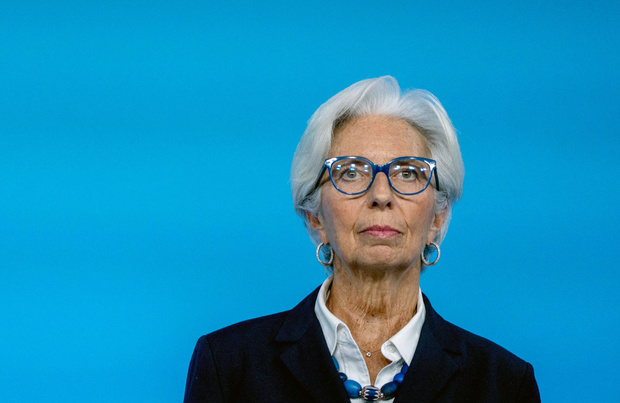
“The war in Ukraine is severely affecting the euro area economy and has significantly increased uncertainty ,” the European Central Bank president said at a virtual press conference. “The impact of the war on the economy will depend on the evolution of the conflict, the effect of current sanctions and possible additional measures,” she added.
These uncertainties explain the caution of the guardians of the euro zone who, unlike the other major central banks, have not initiated increases in their key rates , nor even defined a precise timetable for increases in an attempt to curb the surge in prices.
At the end of the Governing Council, the institute was therefore content to reiterate its March signal in favour of price stability , announcing that net asset purchases, carried out within the framework of the APP, will end in the “third quarter”. The first rate increase will occur “some time after” the end of these purchases , i.e. “between a week and several months” later, indicated Ms Lagarde.
The ECB kept its rates at their historically low level on Thursday.

“Persistently high energy costs, combined with the loss of confidence, could lower demand and slow consumption ,” thus weighing on growth in the eurozone, said Ms. Lagarde. The Frenchwoman painted a bleak picture of the economic situation : “the war is already weighing on business and consumer confidence, particularly through the uncertainty it is causing. Energy and commodity prices are rising sharply. Households are facing a higher cost of living,” while “companies are facing higher production costs and the war has created new bottlenecks” in supply chains.
An unmasked about-face from Her Excellency Mrs Christine Lagarde.

I predicted that Europe was going to go through one of its biggest periods of Stagflation while Madame La Marquise Christine Lagarde in her statements to German and European newspapers, including even during her visit to Cyprus (read details in my writing below), she continued to tone down this trend and promise the sale of shares and assets to allow #cashing and #profit growth during the wind of the storm.
With this almost lethargic “wait and see” approach, Madam President, Christine Lagarde therefore opted not to intervene on the first repercussions of the inflation inherited from the #covid19pandemic , nor on the impact of the blockages at the level of the #supplychainmanagement Chain and the affected sectors, namely small and medium-sized enterprises which are the first and most exposed to such changes in international trade flows.
Crumbling of parity and purchasing power eroded by inflation as compensation for losses and cuts in the rate of profit and profitability of international trade that suffer speculation and the lack of corrective reaction and especially the continuation of sanctions that turn out to be double-edged and since their origins are Western, they have a rapid boomerang effect and expansion such as a tiger that is let out of the cage, a devastating effect without any measure or consideration at the level of its intensity or the sectors where it occurs such as continuous bursts of targeting and slaughter of the forms of creation of added value

I had written on the issue of Stagflation since the outbreak of hostilities but no one had reacted at that time and now we are getting there and Ms Christine Lagarde has resigned herself to admitting it while she made haughty speeches without economic and financial substance based on the reality of the facts on the ground. All that Madame la Marquise Christine Lagarde did was to “shift the blame” to make people accept that the strategy pursued under her presidency by the European Central Bank was infallible and corrective which was more like adding fuel to the fire, a fire coming from a spark from the East
Christine Lagarde had therefore not taken any decisions to moderate the impact coming from the combination of these inflationary and disruptive factors at the level of operational vectors, productivity, and employment as well as the distribution of the money supply.
Mrs Christine Lagarde had therefore not applied corrective measures coupled with a more targeted intervention on the fluctuations of the Euro, a greater opening to the currencies of other countries, especially African ones, and the integration of new methods of payments and settlement of debts and loans.


Ms. Christine Lagarde just continued to target the capital market and the adjustment on the Dollar and the monetary policy and that of the interest rate preferred by the Federal Reserve Bank of New York, an admission on the lack of absolute independence of the European monetary policy.
This policy was intended to allow the flow of direct investments to sectors not yet completely affected by the repercussions of the sanctions, to give them time to undertake rescue and refuge operations, and therefore a withdrawal and retreat in the face of the continual erosion of the liberal system of commodity exchange and the circulation of parallel currency.
We are no longer in a capitalist system where the invisible hand regulates opposing forces in a position of balance of their strengths and weaknesses through the magic of the Invisible Hand.
This is the end of the so-called propaganda about the democratization of gain and the realization of profit through entrepreneurship and the globalization of this adventure presented to third countries as bait to prime them for the liberal system that is receiving a cascading Knock-out Out, one after the other from first China, India and now Russia.
The authorities of the #unitedstates and the #europeanunion who are sawing off the branch on which their national interests and their economic reasons for being are planted: they have every interest in putting on new gloves and approaching #moscow and #beijing with approaches of settlement and conciliation in order not to completely cut down the tree under which they have found shelters and places of idleness since the great imperialist expansion that was accompanied by the emergence of Soviet Russia, leading the world into a disastrous drift for more than a century of endless conflicts and wars.
The fire is at the edge of this forest which is transformed into a jungle thanks to the flagrant non-compliance with the signed agreements and the intransigence of imposing directives without taking into account the national and cultural personality of the States that reject excessive Westernization and its distorted liberalism, usurper and devastating of local and regional living conditions for the popular masses. Through manipulations of the capital markets and the continuous pressure of the policy of conditionality pursued by the World Bank, the International Monetary Fund, and the major international banks and financial groups.

The orientations of the so-called “Sustainable Development” double at the level of their relationship with the international market through their programs of offers of tax, financial and infrastructural advantages, and other forms of seduction which is designated by the label: Attractiveness. In fact an attractiveness of troubles and imbalances exhausting national resources for a real take-off or even the realization of productions with high added value.
Thus, countries receive loans just to compensate for their drop in export revenues and also to fill the growing deficits in current accounts and external balances, and are thus integrated into a spiral of indebtedness and loss of growth distilled by the effects of the international situation whose levers are ultimately in the hands of these large supra-international groups which ignore and have no regard for national borders.
Thus, globalization in such forms is achieved by importing all the problems of the West, the primary effects of which are, in most cases, the insemination of a system of extroverted subcapitalization accentuating regional imbalances, institutional injustices and the sustainability of the selective underdevelopment of national capacities for economic growth.


European Central Bank
Débat sur la Monnaie: Economie Politique ou Politique Economique

Updated 12/1/2021
KEY POINTS
Headline inflation came in at 4.1% for the month on Friday, preliminary data from the European statistics office Eurostat showed.
That was the highest level since July 2008, according to Reuters data, and was higher than a consensus forecast of 3.7%. The September figure was 3.4%.
ECB President Christine Lagarde said on Thursday that rising energy prices, recovering demand and supply bottlenecks were pushing up inflation.
Eurozone inflation rose to 4.1% in October, a new 13-year high
Said El Mansour Cherkaoui, Ph.D. ★
Madam President of the European Central Bank,
European monetary policy must have a universal objective and not be limited to the members of the euro area alone.
Tightening credit standards when difficulties exist puts additional pressure on productivity and growth. Non-performing loans for their amortizations can be auctioned off.
The ECB can play a central role in the integration of Africa given its raison d’être which is the European integration process.
In fact, with the rise of Fintech and the trend towards digital monetization, the European Central Bank should be at the forefront of these technological developments that can support economic growth and job creation while increasing profitability and maintaining price stability in Africa.
The instruments currently used by the European Central Bank must increase the areas of their operations and implementations to extend monetary policy outside the euro area. This is achievable through the mechanisms of foreign exchange operations, foreign exchange reserve management, and as mentioned above integrating the operations of the European Central Bank into payment systems such as those provided by Fintech allowing transnational operations and first and foremost in Africa.
Finally, a voice is expressed on the reasons for the passage and the continual demotion of formerly colonized countries from the level of developing countries to the level of underdeveloped countries and currently sinking to the level of sub-capitalist countries.
This undercapitalization has been accentuated by the globalization of direct and indirect foreign investments and their impact on social structuring and the consolidation of local elites that facilitate the internalization of the demands of international financiers. Poverty has consolidated and spread like an economic virus in subcapitalist societies, weakening their participation in global growth, thus accentuating recessions and even current inflation.
The manipulation of commodity prices as well as consumer product prices is the result of this collusion between the supporters of the Global Supply Chain and these governing elites, including national banks and transnational financial institutions. The United States has opened an investigation into this matter.
Similarly, the eurozone is experiencing a year-on-year inflation rate of 4.9%, which has never been the case since the launch of the euro in 1999.


Finally a voice speaks about the reasons why formerly colonized countries have emigrated from the level of developing countries to the level of underdeveloped countries to achieve the status and privilege of currently sinking into deep sub-capitalism.
This undercapitalization has been accentuated by the globalization of direct and indirect foreign investments and their impact on social structuring and the consolidation of local elites that have facilitated the internalization of the demands of international financiers. Poverty has spread and propagated like an economic virus in subcapitalist societies weakening their participation in global growth thus accentuating recessions and even current inflation.
The manipulation of commodity prices, like the prices of consumer products, is the result of this collusion between the supporters of the Global Supply Chain and these governing elites, including national banks and transnational financial institutions. The United States has launched an investigation into this possible collusion.
Similarly, the eurozone is experiencing a year-on-year inflation rate of 4.9%, which has never been the case since the launch of the euro in 1999.
The Eurozone refers to a list of countries that have the dual characteristic of belonging to the European Union and having opted for the euro as their national currency. The euro (€) is currently the official currency of 19 of the 27 EU member states, which together make up the Eurozone and some 341 million people use the Euro every day, making it the second most widely used currency in the world.
As of 01/01/18, these are Austria, Belgium, Cyprus, Estonia, Finland, France, Germany, Greece, Ireland, Italy, Latvia, Lithuania, Luxembourg, Malta, Netherlands, Portugal, Slovakia, Slovenia, Spain. Although using the euro as their currency, Andorra, Monaco and the Vatican are not part of the Eurozone countries.
The Eurozone inflation figures for November are historic. At 4.9% year-on-year, European inflation has never reached such levels since the launch of the euro in 1999. Rising commodity prices (energy prices rose 27% year-on-year in November), combined with strong economic growth and emerging bottlenecks in industry continue to explain this extraordinary return of inflation that no one believed in until a few months ago. Let us recall that the dominant theme before the Covid crisis in early 2020 was the risk of deflation that had been threatening the United States and Europe, like Japan, for decades.
With such figures, the dilemma of the ECB and all central banks becomes increasingly untenable. How to stop the extreme monetary policies of zero interest rates accompanied by liquidity injections to combat this inflationary peril can generate a high risk of recession and threaten purchasing power and consumption.
Neither the ECB nor any other central bank has yet taken a decision, and it is unlikely to do so quickly given the uncertainties surrounding the Omicron variant and its potential consequences for growth and financial markets.
The ECB’s official target is still… 2%, while another major risk will then emerge: the impact of massive rate hikes on debt servicing. If interest rates skyrocket, the situation will become uncontrollable and require fiscal austerity.
Updated 11/27/2021
Christine Lagarde • Présidente de la Banque centrale européenne 19h • Modifié • Il y a 19 heures
We do not expect the current rise in inflation to last, I explained in an interview with the editor-in-chief of the Frankfurter Allgemeine Sonntagszeitung, Gerald Braunberger.
Some other important points covered:
➡️ If we at the European Central Bank were to tighten monetary policy now, we would expect to see the impact in 18 months. But our forecasts show inflation falling by then.
We would cause unemployment and would not have countered the current high inflation. I would find that wrong.
➡️ Interest rates can rise when we see inflation reaching our 2% target over the medium term, sustainably and durably – that is, not just for a short period of time.
Interview with Christine Lagarde, President of the ECB, conducted by Gerald Braunberger, Dennis Kremer and Christian Siedenbiedel on 23 November and published on 26 November 2021
Ms. Lagarde, inflation rates are rising all over the world. Inflation in the United States is at 6.2%, while in Germany, a rate close to 6% is expected for November. Is inflation getting out of control?
At the European Central Bank, we are of course monitoring this very closely. And not only because our main objective is to maintain price stability and inflation is a crucial indicator of this. But also because we know that inflation affects people. The less privileged and the less well-off are the ones who suffer the most from inflation. That is why we have to continue to look at it very carefully.
Are you feeling the effects of rising inflation in your own daily life?
Of course, the rise in energy prices is the most notable. After all, energy price inflation now accounts for about half of the high inflation rates. You can’t help but notice the price increase when you fill up at a gas station or buy heating oil for the winter. As a Frenchman, I keep a close eye on the prices of good bread at the bakery. It stands out at the moment and worries a lot of people – but we don’t expect this rise in inflation to last. It will ease next year. We expect inflation rates to start falling as early as January.
What makes you so sure? Won’t there be second-round effects, if unions demand higher wages to compensate for higher prices?
Judging from what we know so far from employer and union surveys, no strong inflationary pressure is to be expected from this front for the time being. The wage agreements negotiated have been very moderate so far. For next year, we must partly expect somewhat higher wage demands. But from what we see, the agreements are unlikely to be of a magnitude that would trigger a wage-price spiral.
Don’t you think that employees might get nervous and still demand inflation compensation if inflation rates now reach a level not seen for many years?
That doesn’t seem to be the case at the moment. And if you look at inflation expectations, both those that can be derived from financial markets and those that come from surveys, then most people don’t expect higher inflation over the longer term. Inflation expectations have increased, but they are below our 2% inflation target. We don’t see any unanchoring of inflation expectations.
Personally, have you ever doubted that inflation could persist longer than your experts currently predict?
I ask myself this question again and again. To answer it, you have to consider what is behind the current high inflation rates. I would distinguish three groups of determining factors. The first is statistical base effects that are related to the pandemic, such as the VAT cut in Germany last year and its reversal, which are now pushing prices up significantly compared to the previous year. Similar temporary pandemic effects can be observed in package holidays, for example. These factors will automatically disappear next year because they will no longer be taken into account in the year-on-year comparison. A second group of factors are supply bottlenecks. Demand surged after the end of the first lockdown while supply is still limited. These bottlenecks, for example, in computer chips, containers, and road transport capacity are persisting for longer than we had initially thought. But the situation will gradually improve next year in this respect as well. The third group is energy prices. We expect the development of energy prices to stabilize at least next year.
But surely no one can know for sure how oil prices, for example, will develop next year?
We see at least good reasons why the sharp rise in energy prices will not last until the second half of 2022. There is in any case no expectation on the oil futures markets that the price increase will continue. But we seek to evaluate and consider as many sources of information on this topic as possible.
Read the full conversation – Click here
Christine Lagarde • Continued – President of the European Central Bank • At the end of this article, read the complete text of this interview
At today’s Eurogroup meeting, we discussed the positive economic outlook in the euro area, with monetary and fiscal policies supporting a strong recovery. We are convinced that the current rise in inflation is transitory. We also exchanged views on the objectives of a digital euro.
Response from Dr. Said El Mansour Cherkaoui
In a world divided by natural resources and by the degree of participation in global supply and demand, the signs of the crisis represent only indicators for international financial institutions whose firm belief is that in the long term the market would be able to correct its excesses, even going so far as to adopt the thesis of the “new paradigm”.
With this self-assurance is based on the belief that growth now comes through increasingly long business cycles and ever higher rates of development, with low inflation and increased productivity, thanks to the efficiency and innovation brought by new technologies. Rostow would be delighted and Keynes would be impressed while Friedman would be relieved, all without any consideration for the development of the human factor.
For these decision-makers, there is collateral damage in the form of frequent financial misadventures, with all the human and political tragedies that they entail, but they remain only inevitable misadventures on the road to economic El Dorado.
Interest rate serves as a lever like the “Invisible Hand” that indirectly regulates any integrated market in the financial and trading world. It is widely accepted that financial instability is deeply rooted in the financial crisis affecting the functioning of markets that imposes recommendations on emerging and developing economies with the sole aim of making them beneficiaries of loans and financial transfers. These indirect capital movements serve to alleviate the impact of expenditures and deficits resulting from investments undertaken by emerging and developing countries in setting up transformative infrastructure and operations in order to be able to compete/compete with their peers for the attraction of foreign direct investments.
The large financial incentives and facilities offered to foreign investors added to the infrastructure expenditure added to the low return received in exchange for heavy and long-term depreciation investments reduce the revenues of the treasuries. The States of developing economies are thus reduced to the ceiling of external indebtedness.
Yet, some time ago, even the International Monetary Fund and the World Bank acknowledged that many of their interventions did not benefit emerging and developing countries that are going through a very severe crisis, and that the medicine administered in the form of sending consultants had disastrous side effects and the prescriptions presented in the form of recommendations proved poisonous and even ended up as overdoses.
Christine Lagarde’s reports and statements: See and read the details in these two links
Two years ago I started my term as President of the ECB. It is very different from what I expected!
The pandemic has been a challenge like no other and I am pleased to say that the euro area economy is now firmly in recovery mode.
In addition to the pandemic response, there are other areas of progress that I am particularly proud of:
1️⃣ Our strategy review, completed in July, which provides a solid basis for how we will conduct monetary policy in the years ahead.
2️⃣ Our climate change roadmap which sets out how we can take climate risks into account in our policy decisions.
3️⃣ Our decision to launch the investigation phase of a digital euro project – this will prepare us for Europe’s digital future.
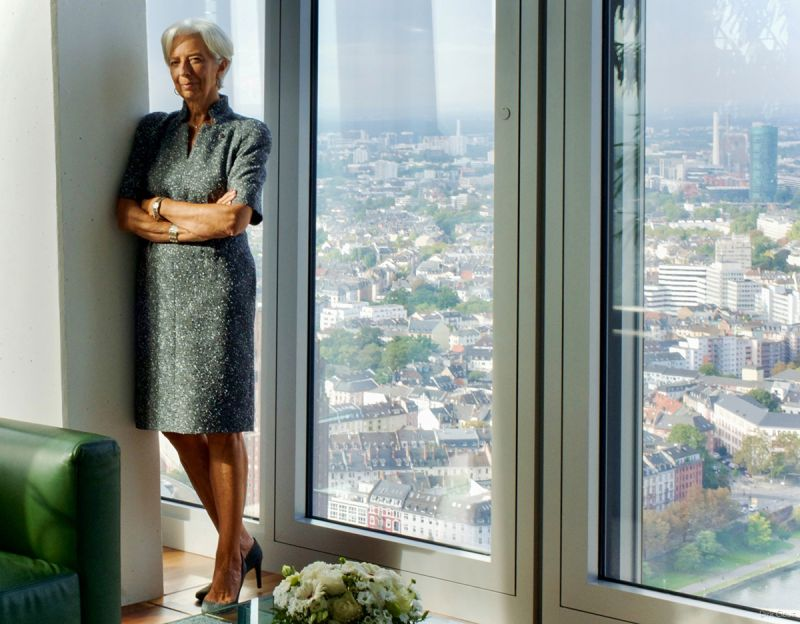
Watch again:
President Christine Lagarde on supply bottlenecks as one of the things currently driving inflation.
Christine Lagarde, President of the European Central Bank, speaks during a press conference on the outcome of the Governing Council meeting, in Frankfurt, Germany, on October 28, 2021.
https://www.linkedin.com/feed/update/urn:li:activity:6859761637142929408
Response from Said El Mansour Cherkaoui, Ph.D.
Ms. Christine Lagarde – European Central Bank
European monetary policy must have a universal objective and not be limited to the members of the eurozone alone.
Tightening credit standards when difficulties exist puts additional pressure on productivity and growth. Non-performing loans for their amortizations can be auctioned off.
The ECB can play a central role in the integration of Africa given its raison d’être which is the European integration process.
In fact, with the rise of Fintech and the trend towards digital monetization, the European Central Bank should be at the forefront of these technological developments that can support economic growth and job creation while increasing profitability and maintaining price stability in Africa.
The instruments currently used by the European Central Bank should increase the areas of their operations and implementation to extend monetary policy outside the euro area.
This is achievable through the mechanisms of foreign exchange operations, the management of foreign exchange reserves, and as mentioned above integrating the operations of the European Central Bank into payment systems such as those provided by Fintech enabling transnational operations and primarily in Africa.
Now for your sweet short explanation about bottlenecks, you really make me laugh. It’s something we listen to on Sidewalk Radio not at your level.
So if we want to find solutions at Radio Hood, no corkscrew for the bottlenecks, just do like the French Hussars, blow the cork with a sabre stroke and there are no more bottlenecks.
Not bad Mrs. Lagarde, On guard Split yourself like the 3 Masterquaires.
Regarding your statement on Supply Chain Management, there is a big difference between what factories can produce and when they produce it that you have not developed at all on this operational productivity and on supply.
Secondly, in terms of transport logistics, there is not only sea freight, there are other means and vectors of transport.
For the maritime side, I’ll just give you an example from my writing on how the Port of Oakland is tackling this problem, here’s my article on it:
Port of Oakland: Giant Cranes Raised Why?
Port of Oakland: Giant Cranes Raised Why?

Said El Mansour Cherkaoui March 12, 2021 Symposia of Determinations I found out about this unusual movement and arrival of these Giant Cranes just a week ago, around March 10, 2021. An article around this date presented this event like a very, very new happening and was developed on the modernization of the Port of Oakland tackling the new challenges raised by the dual competition … Continue reading
Christine Lagarde
- European Central Bank
- International Monetary Fund
- The World Bank
- African Development Bank Group
- Global Leverage
- AFRICANA ENTREPRISE
Cryptocurrency
Cryptomoney #cryptocurrency
Response from Said El Mansour Cherkaoui, Ph.D. ★
For the moment it is a pure scam like casinos.
A currency that floats without meaning, without productive and growing added value, and which is not based on a monetary reserve.
This reserve should be a surplus whose several interbank transactions verify and sanction, control, and increase its transfer base, its convertibility [example of Central Banks and LIBOR], and its achievements in the form of deposit, exchange, conversion, settlement, loan, and support for productions. integrated into the international circuit of regional, national, and interbank exchanges.
Add to this, Cryptomania is not used for the payment of debts or financial obligations such as taxes.
If all these procedures do not exist in the fiduciary identity and financial value of Cryptomania, it cannot therefore claim legal institutional and monetary financial legitimacy.
It is neither the number of participants, the level of transactions, the amount made, nor the slogans and propaganda speeches that will give legitimacy to Cryptocracy and Cryptorobotech.
Publications by Said El Mansour Cherkaoui on related topics
Some of my publications related to the topic addressed by President Christine Lagarde can serve as a complement to my aforementioned commentary while presenting the role of the World Bank and the International Monetary Fund in shaping the evolution of the global economy with a focus on the economies of the Global South. (The articles are written in French and/or English).
Interview with Frankfurter Allgemeine Sonntagszeitung
Interview with Christine Lagarde, President of the ECB, conducted by Gerald Braunberger, Dennis Kremer and Christian Siedenbiedel on 23 November and published on 26 November 2021
- INTERVIEW – 26 November 2021
Madame Lagarde, inflation rates are increasing around the world. Inflation in the United States is 6.2%, while in Germany a rate of close to 6% is expected for November. Is inflation spiraling out of control?
At the European Central Bank, we are of course monitoring that very closely. And not only because our primary objective is maintaining price stability and inflation is a crucial indicator of that. But also because we know that inflation affects people. Those who are less privileged and less well-off are the ones who suffer the most from inflation. That’s why we need to keep looking at it very carefully.
Do you feel any effects of rising inflation in your own daily life?
Of course, the rise in energy prices is the most noticeable. After all, energy price inflation now accounts for around half of the high inflation rates. You can’t help noticing the price increase when you fill up your tank at a petrol station or buy heating oil for the winter. As a French person, I keep a close eye on the prices for good bread at the bakery. That stands out at the moment and is making many people worried – but we expect that this rise in inflation will not last. It will subside next year. We expect that the inflation rates will start to fall from as early as January.
What makes you so sure? Won’t there be second-round effects, if the trade unions demand higher wages to compensate for the higher prices?
Judging by what we know from surveys of employers and trade unions so far, no strong inflationary pressure is to be expected from that front for the time being. The negotiated wage settlements have been very moderate so far. For next year, somewhat higher wage demands are partly to be expected. But based on what we are seeing, the settlements should not be on a scale that might trigger a wage-price spiral.
Do you not think that employees could become nervous and nonetheless demand compensation for inflation if inflation rates now hit a level that has not been seen for many years?
That does not seem to be the case at the moment. And if we look at inflation expectations, both those which can be derived from the financial markets and those resulting from surveys, then most people do not expect higher inflation in the longer term. Inflation expectations have risen, but they are below our inflation target of 2%. We don’t see any de-anchoring of inflation expectations.
Do you personally never have any doubts that inflation might persist for longer than your experts are currently predicting?
I ask myself this question again and again. To answer it you have to consider what is driving the current high rates of inflation. I would distinguish three groups of driving factors. The first is statistical base effects which are related to the pandemic, such as the VAT reduction in Germany last year and its reversal, which are now sharply pushing up the price increase relative to the previous year. Similar passing pandemic effects can be seen in respect of package holidays, for example. These factors will automatically disappear next year, as they will fall out of the year-on-year comparison. Supply bottlenecks are a second group of drivers. Demand surged after the end of the first lockdown whereas supply is still constrained. These bottlenecks in, say, computer chips, containers, and road haulage capacity are obviously persisting for longer than we had initially thought. But the situation will gradually improve next year in that respect too. The third group is energy prices. We expect that energy price developments will at least stabilize next year.
But surely nobody can know for certain how oil prices, say, will develop next year?
We at least see good reasons why the strong price increase in energy will not last into the second half of 2022. There is in any case no expectation in the oil futures markets that the price increase will continue. But we are seeking to evaluate and consider as many sources of information on this topic as we can.
Do you understand the special concerns in Germany about the high inflation rates?
Yes, I understand these concerns very well; inflation in Germany is higher than in some other countries – in Italy or France for example. In addition, there are cultural differences and a special history with inflation in Germany in the 1920s. The collective experience of inflation in Germany is a different one to that of France or Italy. I understand all that. That’s why we have to thoroughly explain why we nonetheless think our strategy is correct and that we are following price developments very carefully.
Many people in Germany have long been calling for signs that the ECB will tighten its monetary policy strategy.
If we were to tighten monetary policy now, we would expect it to have an impact in 18 months. That is the extent of the time lag before our monetary policy measures take effect. According to our forecasts, however, inflation would have fallen back again by then. We would cause unemployment and high adjustment costs and would nonetheless not have countered the current high level of inflation. I would find that wrong.
Prominent economists like Charles Goodhart think that the whole world is about to enter an era of higher inflation. Does that not worry you?
It goes without saying that we think about longer-term inflation developments. The issue is whether factors that have so far dampened inflation, such as demographic developments or globalization, are now reversing and could lead to higher rates of inflation. There could be changes; after the pandemic, firms may think differently about globalization and relocating production to cheaper countries. Globalization will change, but it will proceed and will in all likelihood continue to temper inflation.
But many firms have been talking about deglobalization since the outbreak of the pandemic.
People have been talking about that for around a year, but it is not really observable in practice. The incentive for firms to cut costs will remain stronger than their desire for independence from suppliers and control over the supply chains. I don’t see any sustainable price-increasing development. By contrast, in my estimation, the changes in demographic developments could have an impact on the future path of inflation, as indeed could digitalization. But all in all, I see factors that will suppress inflation in the longer term rather than factors that will drive it up. In any case, monetary policy has enough time to respond appropriately to such longer-term trends.
But are climate policies themselves not going to make energy more expensive and push inflation up, at least temporarily?
This could indeed be the case. If the governments keep their commitments on the Paris Agreement and the recent climate conference in Glasgow, it will have an impact on energy prices. Studies show that energy prices react to climate protection measures by increasing significantly at first. However, when demand falls, the price will drop significantly. This effect will materialize.
Deutsche Bundesbank President Jens Weidmann will step down at the end of the year. Will you miss him?
I will. I have the utmost respect for his intellect. I look back fondly on our many encounters over the past few years, for example at G20 meetings. There is one photo in particular that reminds me of that good cooperation– it shows us both at a G20 meeting in Mexico.
Are you not slightly relieved that Mr Weidmann – a big skeptic of the current ECB stance – will be gone?
I am not relieved in the slightest, just the opposite – I am a bit sad that he decided to go. But I am certain the German Government will choose a candidate that will represent the Bundesbank’s views and the concerns of the German people in a similar fashion. I paid close attention to Mr Weidmann’s speech at the Frankfurt European Banking Congress recently. In it, he described the Governing Council of the ECB as a place where any opinion and concern can be voiced. I see that as part of my approach to leadership. I am 65 and my experience has taught me that it is good to bring people together, exchange arguments, and talk openly about concerns and objections. It is only then that you can try to find as much consensus as possible. We cannot always unanimously agree on every single decision.
In a recent speech, Mr Weidmann called on the ECB not to underestimate inflation. Have you been doing that recently?
In recent quarters, we have had to gradually adjust our inflation forecasts. This is true. But most economists all over the world have not fared any better. This experience has taught us to consistently review our baseline scenario and adjust it when needed.
So can you assure us that you will raise interest rates when necessary?
Of course, we will act when necessary. When we see inflation reaching our two percent target over the medium term, durably and sustainably – meaning not just for a short period – then the interest rates can rise again. Such an interest rate hike must serve our mandate of price stability, just like our entire monetary policy. When these conditions are met, no one will be happier than me to normalize monetary policy. Before we can raise rates, however, we will need to reduce our asset purchases.
Unconventional monetary policy measures have now become almost normal – is this not a problem? When asset purchases and negative interest rates were introduced, the general public was told that these measures were temporary. Many now doubt that the ECB will ever go back.
Back in the summer we unanimously approved the outcome of our monetary policy review. Part of that is the medium-term symmetrical inflation target of two percent. We also agreed on what makes up our toolbox, and asset purchases are explicitly included. We need to ask ourselves which instruments work best to help us fulfill our mandate. We should keep all our tools ready, but we do not need to use all of them all the time.
In 2020, following the outbreak of the COVID-19 pandemic, the ECB launched the pandemic emergency purchase program (PEPP), which has allowed it to buy bonds flexibly. Is it going to end in March 2022, as you promised? The pandemic is coming back with a vengeance right now.
Under the current circumstances, I have no reason to doubt that we will stop net asset purchases under the PEPP in the spring. This does not mean that the PEPP will end completely – the maturing bonds need replacing and these reinvestments will need to continue. And let us not forget that we have other purchase programs in our toolbox. I sincerely hope – for the sake of everyone’s health – that the pandemic will be over in the spring and that we will be more resistant to the new infection waves like the one we are seeing in Europe now. That is out of my hands, though – it is up to the scientists who develop vaccines, and of course to the people themselves, who should decide to get vaccinated.
Robert Holzmann, the Governor of the Oesterreichische National Bank, has suggested that the ECB should stop all of its asset purchases next autumn if inflation has reached two percent by then. What do you think of this proposal?
I generally do not comment on what individual heads of central banks have said. All opinions are welcome, but they should be expressed at the right time. That time is 15 and 16 December, when the Governing Council of the ECB meets again.
Some central banks, such as the Reserve Bank of New Zealand, have recently voiced concerns about a global rise in asset prices. Are you also concerned?
Asset purchases have been very efficient, but their impact may weaken over time. Therefore, we must always be mindful of their side-effects, for instance rising asset prices, to decide whether using this tool is still proportionate. Rest assured – we are paying very close attention to it.
Do you not feel that the side effects are starting to dominate?
No, the impact of the bond purchases is still positive and outweighs the negative side effects.
Nevertheless, it seems like the ECB shies away from the exit for fear of spooking the financial markets.
It is my strong belief that monetary policy needs to work for all Europeans. The markets are not our primary audience, nor are they the main recipients of our communication. Nevertheless, we do need to pay attention to financial stability. There is no price stability without financial stability. The two are closely interconnected, although it is price stability that is our primary mandate. And our monetary policy affects the economy not only through banks but also via the financial markets.
Some market players try to put the ECB under pressure by vociferously calling for interest rate increases – for example via Twitter. Do you pay attention to them?
I’m glad to say that I don’t have to follow all the things people say on Twitter. My press team takes care of that.
On the other hand, the ECB is increasingly accused − under the heading of fiscal dominance − of giving too much consideration to European countries’ high levels of debt.
Fiscal policy is not my area. However, I was very satisfied with the developments on 20 July this year. Europe’s government leaders decided, together, to launch the Next Generation EU recovery fund, which will be able to issue common bonds at the EU level. Germany has also agreed to it. For this, I am very grateful to Angela Merkel who recognized the importance of the issue. It sent a very strong fiscal policy message.
However, some critics considered the message rather questionable.
Unfairly. You know, the rest of the world always doubts Europe. I have lived long enough outside of Europe to know that and to regret it. However, that agreement in July was a clear demonstration that Europe makes the right decisions when it comes to it. It was a privilege for me, as ECB President, to be able to support this process. It was no stroll in the park. It was a tough debate that cost a lot of time and many long nights. However, it was a strong signal to the world. Now, though, the European governments have to stick to the agreement and to deliver what they promised. They must implement the promised structural reforms and they must shape a strong Europe. Implementation is always the hardest part. I remember well the words of my friend, Wolfgang Schäuble, who – as a minister in the Council of European Finance Ministers – always said “Implementation, implementation, implementation.” He always looked at us very strictly as he said it. And he is right. In the next three years, we will see how well Europe can succeed in this.
Is the ECB then ready to act against the fiscal policy interests of EU Member States, if necessary? Is the ECB independent of political pressure?
We are an independent institution and of course, our actions are independent of political pressure. A pressure, by the way, that I often observed abroad as Managing Director of the International Monetary Fund. It’s no fun for those central bank governors. That is why it is clear to me that we must focus on our mandate. We will simply ignore attempts to exert political influence.
Do you think the ECB will have to withstand even heavier political pressure in the future?
There may be attempts to exert more pressure. But it won’t lead to anything.
Doesn’t all of this depend on the success of your predecessor, Mario Draghi, who is now Italy’s Prime Minister? If Italy gets a handle on its problems, does the ECB President also sleep more peacefully?
All Member States and all European heads of government shoulder huge responsibility. The instruments are here; they are on the table. A good €800 billion is at the ready in the Next Generation EU recovery fund. Now governments must decide how they will use it. That is not my responsibility. However, they should know this can change the course of things.
You also wanted to change a few things at the ECB – for example, the way the ECB communicates with the public. Are you satisfied with the results so far?
We are working on it. Yes, it was my objective from the start to communicate simply without falling into the trap of oversimplifying. That is why, for instance, we have changed the introductory statement that I make before our press conferences after the meetings of the Governing Council. We have shortened it and cut back on the jargon. Sometimes we have used complicated words to explain basic concepts. It doesn’t have to be like that. Without good communication, we cannot do our job as central bankers.
Nevertheless, the introductory statement is still hard to understand for people outside the world of finance.
Yes, that is true. My neighbor certainly won’t be reading it before bed. However, we can still make it more understandable. In times gone by, central bankers were proud of the fact that it was difficult, if not impossible, to understand them. I have the privilege of knowing the former Chair of the US Federal Reserve, Alan Greenspan, quite well. He would probably disapprove of my approach. Times have changed, however. In the world of fake news, nothing is more important than being properly understood.
There is a need for explanation when it comes to your efforts to make monetary policy greener. For many climate activists, you are not doing enough. Greenpeace even paraglided onto the roof of an ECB building to call for more climate protection.
Yes, I remember that well. My first thought was: how dangerous is this – and how can we prevent an accident? I do not think it is a safe and appropriate way to express your point of view.
Do you perceive the type of criticism as unfair?
Civil organizations have to speak up when they deem it necessary. However, central banks are not in the driving seat when it comes to fighting climate change. We are not the ones who are steering the bus; that is more the governments and parliaments. But we are all sitting on the bus together. And everyone on the bus – that includes you and me – should not forget that climate change is about the survival of humanity. That is why, within our mandate, we have to take climate-related risks into account in our calculations. But of course the ECB does not decide on climate policy.
Let’s end with a personal question. How often is Europe’s monetary policy decided at your kitchen table?
More often than you might think. A few important decisions have been made there. For example, we made decisions on the pandemic emergency purchase program, or PEPP, at my kitchen table. We were all in lockdown and I sat there without Zoom and the video conferencing system. Unbelievable how quickly you forget it. Back then, we had one conference call after another. Luckily, we all knew each other well enough already to know who was speaking. Even if I had to ask now and then.
You said you would see yourself as an owl when it comes to monetary policy. That is to say, you wouldn’t allow yourself to be limited to just one monetary policy position. After two years leading the ECB, do you still see yourself as an owl or are you now more of a dove?
Absolutely as an owl – guided by its mandate. Since I said that, friends from around the world now send me either figurines or photos of owls. I am now a passionate collector of owls.
Related topics
Disclaimer
Please note that related topic tags are currently available for selected content only.