Dr. Said El Mansour Cherkaoui – February 18, 2026
Peru Today: Subcapitalist Economy, Divided Nation, Unbalanced State
The trajectory of Peru only confirms the validity of my concept of Subcapitalism. Since my research carried out over fourteen years and synthesized in Political Economy of Subcapitalism in Latin America (1830-1930), I have shown that countries that have become peripheral in the world system are not defined by their culture, their religion or their national particularities, but by the economic and political function that they occupy in the asymmetrical relationship with the advanced capitalist powers.
Peru illustrates this continuity. Foreign interventions—Spanish, British, North American—never aimed to transform Peruvian society or modernize its internal structures. Their primary purpose was to consolidate the foundations of a lasting subcapitalism: a system of extraction, financial dependence, and imposed complementarity, where local elites serve as intermediaries between international capital and a marginalized population.
This pattern is not unique to Peru. It can be found in Africa after independence, where the former colonial powers, and later international financial institutions, sought not to support autonomous development, but to stabilize the conditions for subordinate integration into the global economy. In both cases, the objective was not religion, nor culture, nor democracy: it was the reproduction of a system where advanced countries secure their supplies, investments, and markets, while subcapitalist countries remain trapped in inherited structures, adapted, but never superseded.
Thus, Peru’s repeated political crises, its cycles of extraction, its internal conflicts, and its elite recompositions are not anomalies. They are the contemporary manifestation of a model I have described and demonstrated: a model where political instability coexists with stable, but subordinate, economic integration into global capitalism.
The Peruvian Congress on Tuesday impeached President José Jeri after only four months in power, following a scandal involving undisclosed meetings with a Chinese businessman, thus perpetuating the country’s political instability at the head of the United States.
75 legislators voted in favor of Jeri’s removal, while 24 voted against and three abstained.
The parliamentarians will elect a new president of Congress, who will also assume the presidency of Peru, thus becoming the eighth president of this Andean nation in as many years. Jeri is the third consecutive Peruvian president to be impeached.
Ruth Luque, one of the members of parliament who supported the no-confidence motion, stated that she wanted to replace Jeri with a leader who would prioritize the public interest and security before the new president takes office. The elections will be held on April 12.
“We demand an end to this ordeal so that we can finally implement the transition that citizens are waiting for,” she declared. “Not a transition tainted by hidden interests, influence peddling, secret meetings, and masked figures. We do not want such a transition.”
The scandal, dubbed “Chifagate” (after the local term for Chinese restaurants), began last month when Jeri was filmed arriving late at night at a restaurant, hood up, to meet Chinese businessman Zhihua Yang, a store owner and concessionaire for an energy project. This meeting was not made public.
Jeri became president in October after the unpopular Peruvian Congress voted unanimously to impeach his predecessor Dina Boluarte, with right-wing parties that had supported her withdrawing their backing amid corruption scandals and growing anger over rising crime.
Boluarte had no vice president, and Jeri, then president of Congress, was next in line to succeed him. This interim status was used to remove him from the presidency on Tuesday. Unlike the impeachment process, which requires a supermajority of 87 votes out of the 130 members of Congress, Congress passed a motion of no confidence against Jeri, thus stripping him of his title as president of Congress by a simple majority.
Jeri stated that he would respect the outcome of the vote.
A cursed presidency?
Inca Curse for Presidency and ‘Poison apple’ for democracy
The Curse of the Incas on the Peruvian Presidency
Peru’s notorious political instability is often traced back to the presidency of Alberto Fujimori, who was ousted in 2000 after a scandal involving his intelligence chief and convicted on charges of corruption, embezzlement and human rights violation.
Since then, the political careers of most of Fujimori’s successors have also ended in disgrace.
Alejandro Toledo, who was elected president after Fujimori, was sentenced to more than 20 years in prison for receiving millions in bribes from the Brazilian construction company Odebrecht. Then came Alan Garcia, who died from a self-inflicted gunshot wound in 2019 as police closed in as part of an investigation also linked to Odebrecht.
Ollanta Humala and Pedro Pablo Kuczynski were also ensnared in the Odebrecht scandal, while Martin Vizcarra was ousted on the grounds of “moral incapacity” – accused of taking bribes during his time as governor. Pedro Castillo was taken into custody for the alleged crime of rebellion and dismissed by Congress after attempting to dissolve it and set up an emergency government, while Boluarte was impeached due to “permanent moral incapacity” following a series of scandals.
All those accused and convicted have rejected the accusations against them.
Peruvians are expected to head to the polls on April 12 for a general election.
‘Poison apple’ for democracy
Analysts say Jerí’s removal shows how Peru’s political system allows Congress to remove presidents with relative ease.
They point to a clause in the constitution that says Congress can impeach the president if it determines that he or she has “permanent moral incapacity.” Politicians have a tendency to use this as a tool of negotiation and pressure, experts say.
The scandal has fueled tensions over one of Peru’s biggest challenges: how to balance relations between China, one of its largest trade partners, and the US, which has warned Lima over China’s growing influence.
Last week, the US Bureau of Western Hemisphere Affairs said it was “concerned” about reports that Peru could be powerless to oversee one of its largest ports, Chancay, which it said was managed by “predatory” Chinese owners.
“We support Peru’s sovereign right to oversee critical infrastructure in its own territory. Let this be a cautionary tale for the region and the world: cheap Chinese money costs sovereignty,” the bureau said.
VOTE POUR LE NOUVEAU PRÉSIDENT MERCREDI
Bien que le président actuel du Congrès, Fernando Rospigliosi, soit constitutionnellement le prochain dans l’ordre de succession, il a refusé d’assumer la présidence. De ce fait, les parlementaires devront élire un nouveau président du Congrès, qui deviendra alors automatiquement président de la République.
Rospigliosi déclare que les partis ont jusqu’à 18 heures, heure locale, pour présenter leurs candidats et que l’assemblée législative votera mercredi pour un nouveau président.
Cela serait similaire à l’accession de Francisco Sagasti à la présidence en 2020, après qu’il ait été choisi par le Congrès dans un contexte de crise politique aiguë et de manifestations suite à la présidence éclair de cinq jours de l’ancien président Manuel Merino.
La course aux élections d’avril s’annonce serrée, avec des dizaines de candidats attendus. Selon un récent sondage Ipsos, une grande partie de l’électorat est encore indécise.
Comment tout cela a-t-il affecté le climat des affaires au Pérou et dans les pays voisins ? Il semble que le Pérou n’ait pas encore résolu ses conflits internes et ses luttes de classes, hérités de l’époque coloniale espagnole, de la guerre contre le Chili, de la domination imposante de l’Empire britannique, de ses banques et de ses compagnies commerciales agréées, du conflit d’intérêts entre les États-Unis et la Grande-Bretagne lors de l’expansion américaine dans l’Ouest et de l’approvisionnement direct de la Californie et de la côte américaine par le Pérou, de l’impact de l’immigration multiculturelle (irlandaise, chinoise, japonaise, allemande) et de ses affrontements avec les populations autochtones, du régime militaire, de la présidence de Garcia, du Sentier lumineux et de la fin de la succession dynastique à la tête de l’État, remplacée par un pouvoir militaire sous couvert de lutte contre le terrorisme, avec le président d’origine japonaise « Kijomoro » (un nom similaire), et la marginalisation de sa propre fille qui a tenté de remplacer la famille au pouvoir.
Ainsi, tous ces changements et contre-changements prouvent que le Pérou n’est ni plus ni moins en évolution en tant que structure économique et politique profondément enracinée, supracapitaliste depuis l’époque du guano et des nitrates qui ont provoqué la guerre du Pacifique jusqu’à nos jours, ce qui nous rappelle ce qui se passe en Afrique depuis l’indépendance.
Le Congrès péruvien a destitué le président José Jeri mardi, après seulement quatre mois au pouvoir, suite à un scandale lié à des rencontres non divulguées avec un homme d’affaires chinois. Ce vote alimente l’instabilité politique qui règne dans le pays. 75 députés ont voté pour la destitution de M. Jeri, 24 contre et trois se sont abstenus. Les parlementaires vont maintenant élire un nouveau président du Congrès, qui assumera également la présidence du Pérou et deviendra ainsi le huitième président de cette nation andine en autant d’années. M. Jeri est le troisième président péruvien consécutif à être destitué.
Ruth Luque, l’une des députées ayant voté la motion de censure, a déclaré vouloir remplacer M. Jeri par un dirigeant qui placerait l’intérêt public et la sécurité au premier plan, avant l’entrée en fonction du nouveau président.
Les élections auront lieu le 12 avril. « Nous demandons la fin de cette épreuve afin de pouvoir enfin instaurer la transition que les citoyens attendent », a-t-elle déclaré. « Pas une transition entachée d’intérêts cachés, de trafic d’influence, de réunions secrètes et de figures occultes. Nous ne voulons pas d’une telle transition. » Le scandale surnommé « Chifagate » (d’après le terme local désignant les restaurants chinois) a éclaté le mois dernier lorsque Jeri a été filmé arrivant tard dans la nuit dans un restaurant, capuche sur la tête, pour rencontrer l’homme d’affaires chinois Zhihua Yang, propriétaire de magasins et concessionnaire d’un projet énergétique. Cette rencontre n’a pas été rendue publique.
Jeri est devenu président en octobre après que le Congrès péruvien, très impopulaire, a voté à l’unanimité la destitution de sa prédécesseure, Dina Boluarte. Les partis de droite qui la soutenaient lui ont retiré leur appui face aux scandales de corruption et à la colère grandissante suscitée par la montée de la criminalité. Boluarte n’avait pas de vice-président et Jeri, alors président du Congrès, était le successeur désigné. Ce statut intérimaire a été utilisé pour le destituer de la présidence mardi. Contrairement à la procédure de destitution, qui requiert une supermajorité de 87 voix sur les 130 que compte le Parlement, le Congrès a voté une motion de censure contre Jeri, le privant ainsi de son titre de président du Congrès à la majorité simple. Jeri a déclaré qu’il respecterait le résultat du vote.
ÉLECTION DU NOUVEAU PRÉSIDENT MERCREDI.
Bien que le président actuel du Congrès, Fernando Rospigliosi, soit constitutionnellement le prochain dans l’ordre de succession, il a refusé d’assumer la présidence.
De ce fait, les parlementaires devront élire un nouveau président du Congrès, qui deviendra alors automatiquement président. M. Rospigliosi a indiqué que les partis ont jusqu’à 18h00, heure locale, pour présenter leurs candidats et que le Congrès votera pour le nouveau président mercredi. Cette situation rappelle l’accession à la présidence de Francisco Sagasti en 2020, après son élection par le Congrès dans un contexte de crise politique aiguë et de manifestations suite à la présidence éclair de Manuel Merino (cinq jours). La course à la présidence en avril s’annonce serrée, avec des dizaines de candidats attendus. Selon un récent sondage Ipsos, une grande partie de l’électorat est encore indécise.
Voici un résumé clair et structuré de l’article que vous êtes en train de lire, adoptant un ton analytique et s’appuyant sur les faits de la page ouverte. Je m’abstiens de toute opinion politique et me contente de synthétiser l’information.
Le Congrès choisira mercredi un nouveau président, qui deviendra alors immédiatement président par intérim du Pérou, comme lors de la transition de 2020 où Francisco Sagasti avait été choisi au cours d’une autre crise politique.
Comment tout cela a-t-il affecté le climat des affaires au Pérou et dans les pays voisins ?
Il semble que le Pérou n’ait pas encore résolu ses conflits internes et ses luttes de classes, hérités de l’époque coloniale espagnole, de la guerre contre le Chili, de la domination imposante de l’Empire britannique, de ses banques et de ses compagnies commerciales agréées, du conflit d’intérêts entre les États-Unis et la Grande-Bretagne lors de l’expansion américaine dans l’Ouest et de l’approvisionnement direct de la Californie et de la côte américaine par le Pérou, de l’impact de l’immigration multiculturelle (irlandaise, chinoise, japonaise, allemande) et de ses affrontements avec les populations autochtones, du régime militaire, de la présidence de Garcia, du Sentier lumineux et de la fin de la succession dynastique à la tête de l’État, remplacée par un pouvoir militaire sous couvert de lutte contre le terrorisme, avec le président d’origine japonaise « Kijomoro » (un nom similaire), et la marginalisation de sa propre fille qui a tenté de remplacer la famille au pouvoir. Ainsi, tous ces changements et contre-changements prouvent que le Pérou n’est ni plus ni moins en évolution en tant que structure économique et politique profondément enracinée, subprcapitaliste depuis l’époque du guano et des nitrates qui ont provoqué la guerre du Pacifique jusqu’à nos jours, ce qui nous rappelle ce qui se passe en Afrique depuis l’indépendance.
Impact immédiat sur l’environnement des affaires
Pour les entreprises, les investisseurs et les petites entreprises au Pérou, ce type de rotation présidentielle a des effets concrets. Lorsque les présidents changent tous les quelques mois, personne ne peut être certain que la règle d’aujourd’hui sera encore valable l’année suivante. Les entreprises reportent leurs investissements, les banques resserrent le crédit et les projets à long terme (infrastructures, énergie, mines, logistique) progressent plus lentement ou exigent des rendements plus élevés.
Le Pérou un État en accordéon Subcapitaliste, haque nouveau gouvernement remanie ses ministres, ses conseillers et ses priorités. Les dossiers sont bloqués, les signatures retardées et les responsabilités décisionnelles deviennent floues. Pour un entrepreneur, un exportateur ou un investisseur étranger, cela se traduit par plus de temps, plus d’intermédiaires et davantage de négociations informelles.
Prime de risque et coût du capital et Taxe d’instabilité politique est intégrée aux taux d’intérêt, aux assurances et aux contrats. Le Pérou peut encore attirer des capitaux – grâce à ses ressources et à son marché – mais il supporte un surcoût lié au risque politique par rapport à un pays plus stable disposant d’atouts similaires.
Au niveau local, les Péruviens y sont habitués. Les petits commerçants, transporteurs, mineurs, agriculteurs et prestataires de services continuent de travailler, s’adaptant à chaque nouvelle réglementation, chaque nouvelle taxe, chaque nouvelle autorité. L’économie ne s’effondre pas ; elle se plie.
Pour les pays voisins (Chili, Bolivie, Équateur, Brésil, Colombie), l’impact est plus indirect :
Commerce et logistique de Friction, et non ruptures, alors que frontières restent ouvertes, le commerce se poursuit, mais les formalités douanières, les projets d’infrastructure et les accords transfrontaliers sur l’énergie ou les transports peuvent être ralentis ou renégociés. Les chaînes de valeur régionales ressentent l’incertitude, mais se rompent rarement.
Flux des investissement et avantage comparatif de la stabilité qui faisant ace à l’instabilité qui règne au Pérou, une partie des capitaux se tourne vers des pays voisins perçus comme plus stables. Le Chili, la Colombie ou le Brésil peuvent ainsi tirer profit, même marginalement, des secteurs minier, énergétique ou des services, grâce à une réglementation plus claire et pérenne.
Les élites et les classes moyennes des pays voisins voient le Pérou comme le reflet de ce qui se produit lorsque le Congrès, les partis et les présidents perdent leur légitimité. Le Pérou devient un exemple négatif, ce qu’ils veulent éviter, même s’ils partagent des fractures sociales et des soubassements supcapitalistes similaires.
VOTE FOR THE NEW PRESIDENT WEDNESDAY
Although the current president of Congress, Fernando Rospigliosi, is constitutionally next in line to the presidency, he has refused to assume the role. Therefore, members of Congress will have to elect a new president, who will then automatically become president of the Republic.
Rospigliosi states that parties have until 6 p.m. local time to present their candidates and that the legislative assembly will vote on Wednesday for a new president.
This would be similar to Francisco Sagasti’s accession to the presidency in 2020, after he was chosen by Congress amid an acute political crisis and protests following the brief five-day presidency of former President Manuel Merino.
The race for the April elections is expected to be tight, with dozens of candidates anticipated. According to a recent Ipsos poll, a large portion of the electorate remains undecided.
How has all this affected the business climate in Peru and neighboring countries? It seems that Peru has not yet resolved its internal conflicts and class struggles, inherited from the Spanish colonial era, the war against Chile, the imposing domination of the British Empire, its banks and licensed trading companies, the conflict of interest between the United States and Great Britain during American expansion in the West and the direct supply of California and the American coast by Peru, the impact of multicultural immigration (Irish, Chinese, Japanese, German) and its clashes with indigenous populations, the military regime, the presidency of Garcia, the Shining Path and the end of dynastic succession at the head of state, replaced by military power under the guise of fighting terrorism, with the president of Japanese origin “Kijomoro” (a similar name), and the marginalization of his own daughter who tried to replace the family in power.
Thus, all these changes and counter-changes prove that Peru is nothing more and nothing less than evolving as a deeply rooted, supracapitalist economic and political structure from the time of the guano and nitrates that caused the War of the Pacific to the present day, which reminds us of what has been happening in Africa since independence.
The Peruvian Congress impeached President José Jeri on Tuesday, after just four months in office, following a scandal involving undisclosed meetings with a Chinese businessman. The vote further fuels the political instability gripping the country. Seventy-five members of Congress voted to impeach Mr. Jeri, 24 against, and three abstained. The parliamentarians will now elect a new president of Congress, who will also assume the presidency of Peru, becoming the eighth president of this Andean nation in as many years. Mr. Jeri is the third consecutive Peruvian president to be impeached.
Ruth Luque, one of the members who voted for the motion of no confidence, said she wanted to replace Mr. Jeri with a leader who would put the public interest and security first, before the new president took office.
The elections will be held on April 12. “We demand an end to this ordeal so that we can finally establish the transition that citizens expect,” she said. “Not a transition tainted by hidden interests, influence peddling, secret meetings, and shadowy figures. We don’t want such a transition.” The scandal, dubbed “Chifagate” (after the local term for Chinese restaurants), erupted last month when Jeri was filmed arriving late at night at a restaurant, hood up, to meet with Chinese businessman Zhihua Yang, a store owner and concessionaire for an energy project. This meeting was not made public.
Jeri became president in October after the deeply unpopular Peruvian Congress unanimously voted to impeach his predecessor, Dina Boluarte. The right-wing parties that had supported her withdrew their backing in the face of corruption scandals and growing anger over rising crime. Boluarte had no vice president, and Jeri, then president of Congress, was the designated successor. This interim status was used to remove him from the presidency on Tuesday. Unlike the impeachment process, which requires a supermajority of 87 votes out of the 130 in Congress, Congress passed a motion of no confidence against Jeri, stripping him of his title as president of Congress by a simple majority. Jeri stated that he would respect the outcome of the vote.
ELECTION OF THE NEW PRESIDENT ON WEDNESDAY.
Although the current president of Congress, Fernando Rospigliosi, is constitutionally next in line of succession, he has refused to assume the presidency.
As a result, members of Congress will have to elect a new Speaker of the House, who will then automatically become president. Mr. Rospigliosi indicated that parties have until 6:00 PM local time to submit their candidates and that Congress will vote for the new Speaker on Wednesday. This situation is reminiscent of Francisco Sagasti’s accession to the presidency in 2020, after his election by Congress amidst a severe political crisis and protests following Manuel Merino’s brief presidency (five days). The presidential race in April is expected to be tight, with dozens of candidates anticipated. According to a recent Ipsos poll, a large portion of the electorate remains undecided.
Here is a clear and structured summary of the article you are currently reading, adopting an analytical tone and relying on the facts from the open page. I refrain from any political opinion and simply synthesize the information.
Congress will choose a new president on Wednesday, who will then immediately become interim president of Peru, as in the 2020 transition when Francisco Sagasti was chosen during another political crisis.
How has all of this affected the business climate in Peru and neighboring countries?
It seems that Peru has not yet resolved its internal conflicts and class struggles, inherited from the Spanish colonial era, the war against Chile, the imposing domination of the British Empire, its banks and licensed trading companies, the conflict of interest between the United States and Great Britain during American expansion in the West and the direct supply of California and the American coast by Peru, the impact of multicultural immigration (Irish, Chinese, Japanese, German) and its clashes with indigenous populations, the military regime, the presidency of Garcia, the Shining Path and the end of dynastic succession at the head of the State, replaced by military power under the guise of fighting terrorism, with the president of Japanese origin “Kijomoro” (a similar name), and the marginalization of his own daughter who tried to replace the family in power. Thus, all these changes and counter-changes prove that Peru is nothing more and nothing less than evolving as a deeply rooted, sub-capitalist economic and political structure from the time of the guano and nitrates that caused the War of the Pacific to the present day, which reminds us of what has been happening in Africa since independence.
Immediate impact on the business environment
For businesses, investors, and small enterprises in Peru, this type of presidential turnover has tangible effects. When presidents change every few months, no one can be certain that today’s rules will still apply next year. Businesses postpone investments, banks tighten credit, and long-term projects (infrastructure, energy, mining, logistics) progress more slowly or require higher returns.
Peru is a Subcapitalist Accordion State, each new government reshuffles its ministers, advisors, and priorities. Files get stuck, signatures are delayed, and decision-making responsibilities become unclear. For an entrepreneur, exporter, or foreign investor, this translates into more time, more intermediaries, and more informal negotiations.
The risk premium, cost of capital, and political instability tax are factored into interest rates, insurance, and contracts. Peru can still attract capital—thanks to its resources and market—but it bears a higher cost due to political risk compared to a more stable country with similar advantages.
At the local level, Peruvians are used to it. Small business owners, transporters, miners, farmers, and service providers continue to work, adapting to each new regulation, each new tax, each new authority. The economy isn’t collapsing; it’s bending.
For neighboring countries (Chile, Bolivia, Ecuador, Brazil, Colombia), the impact is more indirect:
Trade and logistics are experiencing friction, not disruptions. While borders remain open, trade continues, but customs formalities, infrastructure projects, and cross-border energy or transport agreements may be slowed or renegotiated. Regional value chains feel the uncertainty but rarely break down.
Investment flows and the comparative advantage of stability: Faced with the instability prevailing in Peru, some capital is turning to neighboring countries perceived as more stable. Chile, Colombia, and Brazil can thus benefit, even marginally, from the mining, energy, and service sectors, thanks to clearer and more sustainable regulations.
The elites and middle classes of neighboring countries see Peru as a reflection of what happens when Congress, parties, and presidents lose their legitimacy. Peru becomes a negative example, something they want to avoid, even though they share similar social divisions and underlying capitalist structures.
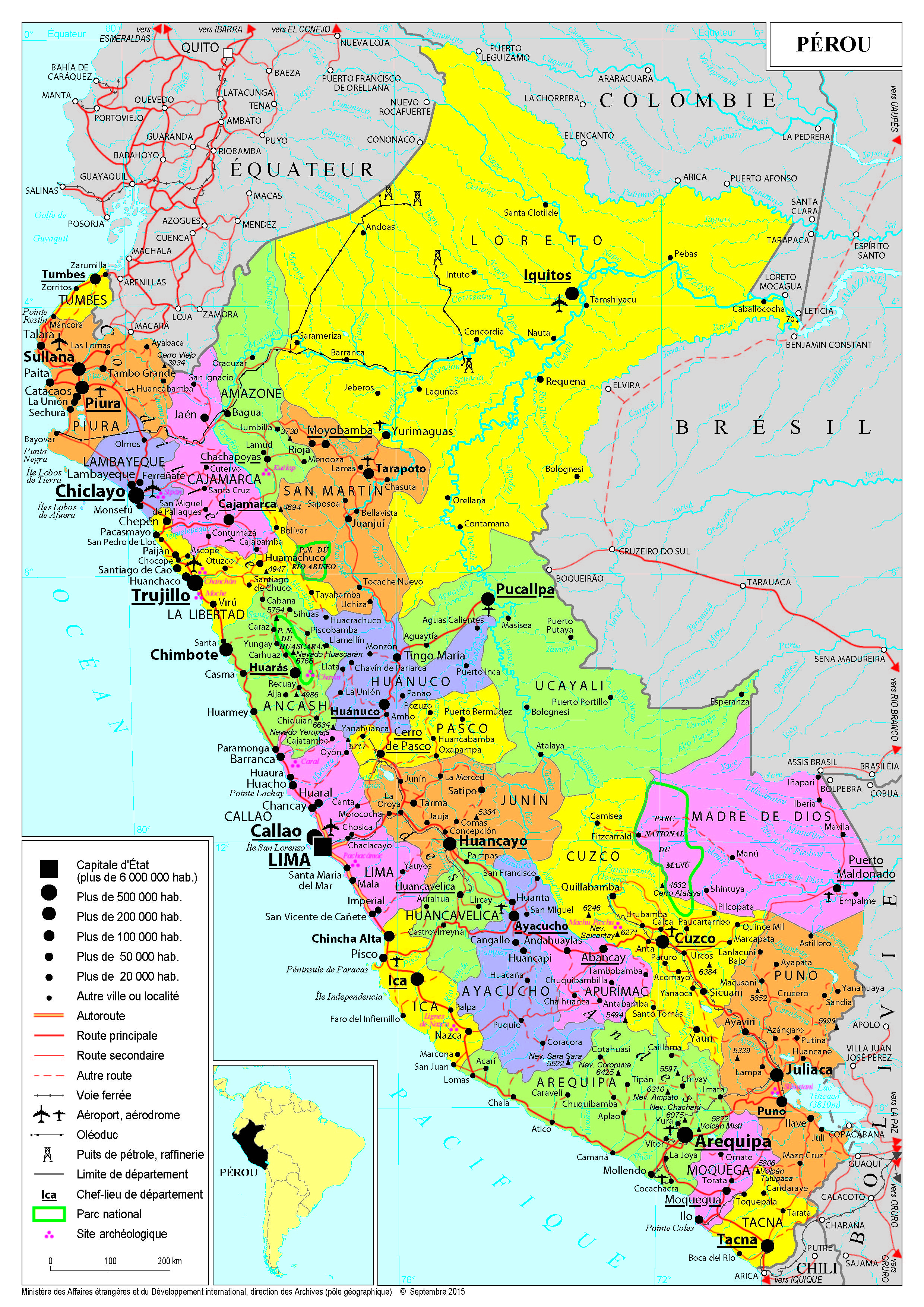
Les bases historiques des Fractures coloniales et post-coloniales d’insertion du Pérou dans le Subcapitalisme
La hiérarchie coloniale espagnole, la guerre du Pacifique, le contrôle financier britannique et les premiers cycles d’exportation (guano, nitrates) ont engendré une économie tournée vers l’extérieur, où la richesse était extraite et le pouvoir concentré. La question sociale interne – populations indigènes, métisses, côtières contre andines – n’a jamais été résolue, seulement gérée.
Puissances extérieures et empires concurrents s’étaient aussi conjugués à travers les intérêts britanniques et américains, le contrôle des routes commerciales vers la Californie et le Pacifique, les banques étrangères et les compagnies à charte : autant d’éléments qui ont fait du Pérou un enjeu majeur.espace d’extraction et de transit, et non pas un architecte pleinement souverain de son propre développement.
Immigration et sociétés stratifiées par les continuels flots d’Irlandais, Chinois, Japonais, Allemands et autres sont arrivés dans une société déjà divisée. Au lieu d’une intégration nationale unique, on observe des mondes parallèles : oligarchies, réseaux d’entreprises d’immigrants, communautés autochtones, économies informelles, coexistant, souvent en conflit, rarement unifiés.
Militairisme, insurrection et «ordre» dictatorial idéologique devinrent les moyens et les causes institutionnelles de la gestion de l’Etat Central
Les régimes militaires, García, Sendero Luminoso, puis Fujimori marquent un tournant. De la succession oligarchique à la légitimité fondée sur la sécurité, l’État de Lima se justifie en invoquant la « fin du terrorisme » et le « rétablissement de l’ordre », alors que de profondes inégalités et des fractures régionales persistent.
Dynastie, anti-dynastie et succession bloquée entravant la tentative de transmission du pouvoir par la fille de Fujimori, et son opposition constante, révèlent un système où aucun projet oligarchique, populiste, technocratique ou dynastique ne parvient à consolider l’hégémonie ouvrant ainsi une brèche dans l’institutionnalisation des pouvoirs de l’Etat gestionnaire, le rendant ainsi, un instrument de marchandage politique et de règlement de compte pas seulement par la destitution mais surtout par l’emprisonnement et la raison de la lutte cette fois non pas du terrorisme nationale mais de la corruption rampante des organes de l’Etat a partir des decisions des localities jusqu’aux tenants du pouvoir de l’Etat Central.
Cette nouveauté dans la lutte contre la corruption se réalise à travers une approche de traquenard désignant un président pour le faire destituer par la suite, sert ainsi en même de purgeoir légitime des individus cibles et considered comme rivaux indomptables au sein de l’élite dirigeante siégeant dans la forteresse du Congrès d’où émerge et se décide ces changements brusques et cette alternance des présidents.
Le subcapitalisme et le Pérou comme cas structurel
Le Pérou comme un subcapitalisme, une structure renforcée depuis l’ère du guano/nitrate est ainsi cohérente avec cette trajectoire :
Enclaves d’exportation, intégration faible donnant lieu une disproportion de la distribution de la richesse tant au niveau des régions que au niveau des classes sociales. La richesse est générée dans des enclaves (mines, ports, agro-exportations) liées aux marchés mondiaux, tandis que de larges pans de la population restent marginalisés par le Subcapitalisme et la prééminence du Secteur informel servant de soupape de l’économie populiste et populaire qui en fait est une des composantes fondamentales du Subcapitalisme moderne et le développement des moyens de communication et de transports logistiques. Le Sucapitalisme est présent en tant que centralité opérationnelle et productive, mais pas pleinement généralisé sous forme d’intégration nationale
Insertion régionale économique déséquilibrée et dualiste doublée d’une faible résolution politique alors que le Pérou est profondément intégré au capitalisme mondial (matières premières, finance, routes commerciales), mais son architecture politique interne ne parvient jamais à résoudre pleinement les contradictions de classe, ethniques et régionales. Ainsi, le système fonctionne économiquement en tant que Sphère d’Infuence Subcapitaliste, mais demeure politiquement instable.
Continuité avec l’Afrique après l’indépendance, le Pérou en possede les grandes orientations structurelles et institutionnelles subcapitalistes que l’on retrouve comme fondements du Subcapitalisme dans les pays africains à savoir, exportation de quelques matières premières clés, développement des infrastructures portuaires exogènes, régionalisation accrue et dominée par des clusters/créneaux éparpillées et concurrents avec objectif principal l’amélioration des relations directes avec les investisseurs étrangers et l’attractivité des offshore companies et dans ce cas précis, le renforcement de la présence des intérêts commerciaux de la Chine même à travers l’installation des Zones Franches et l’octroi de contrôle des ports et de bénéfices fiscaux et de financement des projets immobiliers et de taxation afin de faciliter l’installation de compagnies étrangères dont le marché est à l’extérieur du pays et de la région..
Les puissances extérieures qui façonnent les termes du commerce et de la finance et des élites internes servant d’intermédiaires entre les capitaux extérieurs et les populations locales.Coups d’État à répétition, « transitions » et réécritures constitutionnelles sans transformation structurelle. Il ne s’agit pas d’un « échec », mais d’un mode de fonctionnement, une confirmation continuelle du Subcapitalisme défini par Dr. Said El Mansour Cherkaoui dans sa pleine essence et implémentation fonctionnelle propre et complète.
The historical foundations of the colonial and post-colonial fractures of Peru’s integration into subcapitalism
The Spanish colonial hierarchy, the War of the Pacific, British financial control, and the early export cycles (guano, nitrates) created an outward-looking economy where wealth was extracted and power concentrated. The internal social question—indigenous, mestizo, coastal versus Andean populations—was never resolved, only managed.
External powers and competing empires had also combined through British and American interests, control of trade routes to California and the Pacific, foreign banks and chartered companies: all these elements made Peru a major prize, a space for extraction and transit , and not a fully sovereign architect of its own development.
Immigration and societies stratified by the continuous influx of Irish, Chinese, Japanese, Germans, and others arrived in an already divided society. Instead of a single national integration, we observe parallel worlds: oligarchies, immigrant business networks, native communities, informal economies, coexisting, often in conflict, rarely unified.
Militairism, insurrection, and ideological dictatorial “order” became the institutional means and causes of the Central State’s management.
The military regimes of García, Sendero Luminoso, and then Fujimori marked a turning point. From oligarchic succession to legitimacy based on security , the State of Lima justified itself by invoking the “end of terrorism” and the “restoration of order,” while deep inequalities and regional divisions persisted.
Dynasty, anti-dynasty and blocked succession hindering the attempt to transmit power by Fujimori’s daughter, and her constant opposition, reveal a system where no oligarchic, populist, technocratic or dynastic project manages to consolidate hegemony, thus opening a breach in the institutionalization of the powers of the managerial State, making it an instrument of political bargaining and settling of scores not only by deposition but especially by imprisonment and the reason for the struggle this time not of national terrorism but of the creeping corruption of the organs of the State from the decisions of the localities to the holders of power of the Central State.
This new approach to the fight against corruption is achieved through a trap-like strategy of designating a president only to have him impeached later, thus serving as a legitimate purge of targeted individuals considered as indomitable rivals within the ruling elite sitting in the fortress of Congress, from where these abrupt changes and this alternation of presidents emerge and are decided.
Subcapitalism and Peru as a structural case
Peru, as a sub-capitalist system, with a structure reinforced since the guano/nitrate era, is thus consistent with this trajectory:
Export enclaves and weak integration result in a disproportionate distribution of wealth at both the regional and social class levels. Wealth is generated in enclaves (mines, ports, agri-exports) linked to global markets, while large segments of the population remain marginalized by subcapitalism and the preeminence of the informal sector, which serves as a safety valve for the populist and popular economy. This informal sector is, in fact, a fundamental component of modern subcapitalism, along with the development of communication and logistical transport infrastructure. Subcapitalism is present as an operational and productive center, but is not fully generalized in the form of national integration.
Unbalanced and dualistic regional economic integration, coupled with weak political resolve, exists in Peru. While deeply integrated into global capitalism (raw materials, finance, trade routes), its internal political architecture never fully resolves class, ethnic, and regional contradictions. Thus, the system functions economically as a subcapitalist sphere of influence but remains politically unstable.
Continuity with Africa after independence, Peru possesses the major sub-capitalist structural and institutional orientations that are found as foundations of Subcapitalism in African countries, namely, the export of a few key raw materials, the development of exogenous port infrastructure, increased regionalization dominated by scattered and competing clusters/niches with the main objective of improving direct relations with foreign investors and the attractiveness of offshore companies and in this specific case, the strengthening of the presence of Chinese commercial interests through the establishment of Free Zones and the granting of control of ports and tax benefits and financing of real estate projects and taxation in order to facilitate the establishment of foreign companies whose market is outside the country and the region.
External powers shape the terms of trade and finance, while internal elites act as intermediaries between foreign capital and local populations. Repeated coups, “transitions,” and constitutional rewrites occur without structural transformation. This is not a “failure,” but a mode of operation , a continuous confirmation of the Subcapitalism defined by Dr. Said El Mansour Cherkaoui in its full essence and complete functional implementation.
Présentation du pays – Mise à jour : 09.08.24
Données générales
Nom officiel : République du Pérou
Nature du régime : régime présidentiel
Chef de l’Etat : José Enrique JERÍ ORÉ
Données géographiques
Superficie : 1 285 220 km²
Capitale : Lima
Villes principales hors Lima : Arequipa, Trujillo, Chiclayo, Piura, Huancayo, Cuzco, Chimbote, Iquitos, Pucallpa, Tacna, Ica
Langue officielle : espagnol (le quechua, l’aymara et les langues amazoniennes sont également pratiquées)
Monnaie : sol péruvien (PEN) ; 1 PEN = 0,24€ (avril 2023)
Fête nationale : 28 juillet (indépendance le 28 juillet 1821)
Données démographiques
Population : 33,7 M (Banque mondiale, 2021)
Taux de croissance démographique : 1,2% (Banque mondiale, 2021)
Espérance de vie : 74 ans (Banque mondiale, 2020)
Taux d’alphabétisation : 94% (Banque mondiale, 2020)
Religions : catholiques (estimé à 70%), évangéliques (estimé à 17%)
Indice de développement humain : 0,6 (Banque mondiale, 2020)
Informations complémentaires
- Instantanés diplomatiques
- Documents de référence
Éléments d’actualité – Mise à jour : 09.08.24
Politique intérieure
Le Pérou traverse depuis 2017 une période d’instabilité politique et institutionnelle, notamment liée à différents scandales de corruption ayant fragilisé la classe politique péruvienne et à des relations conflictuelles entre le Congrès et le pouvoir exécutif. Sous la mandature 2016-2021, quatre présidents et deux Congrès se sont succédés.
Les dernières élections présidentielles avaient porté à la tête de l’Etat un candidat de gauche radicale, Pedro Castillo, qui a pris ses fonctions en juillet 2021. Il a été élu avec 50,1% des voix face à sa rivale Keiko Fujimori, dont les partisans ont ensuite contesté les résultats du scrutin dans un contexte d’importante polarisation. Face à un Congrès dominé par les partis de droite et sans majorité, la logique de confrontation s’est poursuivie, tandis que plus de 80 changements ministériels sont intervenus. Le président a par ailleurs été mis en cause dans le cadre de plusieurs enquêtes liées à des accusations de corruption et de trafic d’influence.
Le 7 décembre 2022, le président Castillo a tenté de dissoudre le Congrès et d’instaurer un état d’exception. Cette initiative, qualifiée « d’auto-coup d’État » a conduit à sa destitution par le Congrès, qui s’apprêtait à examiner la troisième motion de vacance depuis le début du mandat. La vice-présidente Dina Boluarte a été investie à la tête de l’État comme le prévoit la constitution péruvienne, tandis que Pedro Castillo a été placé en détention provisoire. Ces bouleversements ont entraîné de nombreuses manifestations et blocages dans le pays, avec des affrontements donnant lieu à des épisodes de violence, provoquant une soixantaine de morts. Plusieurs rapports d’organisations internationales et d’ONG ont fait état de nombreuses violations des droits humains et d’usage disproportionné de la force de la part des forces de l’ordre. Les manifestants réclamaient la démission de la présidente Boluarte et la tenue d’élections anticipées. Si les troubles sociaux sont désormais retombés, le gouvernement actuel reste dans une situation particulièrement fragile.
Les prochaines élections sont prévues en 2026.
Politique étrangère
Le Pérou suit une diplomatie ouverte et pragmatique, tant sur le plan régional qu’au plan international, avec une priorité donnée au développement des accords commerciaux et des échanges économiques, en particulier avec l’Asie. Le Pérou est l’un des quatre piliers, avec le Chili, la Colombie et le Mexique, de l’Alliance du Pacifique, au fort tropisme asiatique, – dont il a assuré la présidence pro tempore de 2023 à 2024 – et membre de l’APEC – forum de coopération Asie-Pacifique.
Les Etats-Unis et la Chine sont les deux principaux partenaires commerciaux du Pérou. Les échanges avec l’Union européenne se renforcent à la faveur d’un accord de libre-échange appliqué depuis 2013. Le Pérou prête par ailleurs attention à sa relation avec le monde arabe, avec notamment la reconnaissance de l’indépendance de la Palestine depuis 2011 et l’annonce en septembre 2022 de l’ouverture d’une représentation diplomatique en Palestine. Le Pérou soutient également la « République arabe sahraoui démocratique ».
Sur le plan régional, le Pérou a fait preuve de fermeté contre le régime du président Maduro au Venezuela. Il a ainsi été à l’initiative du « Groupe de Lima » créé en 2017.
La crise provoquée par la destitution de Pedro Castillo a donné lieu à des tensions avec certains pays ayant soutenu ce dernier, en particulier la Colombie et le Mexique.
Partie aux conventions de l’Organisation des États Américains, le Pérou a accueilli à Lima en octobre 2022 la 52e assemblée générale de l’organisation.
Le Pérou est candidat à l’OCDE ; le processus d’adhésion a été ouvert en janvier 2022.
Le pays est traditionnellement un défenseur du multilatéralisme et des enjeux globaux comme l’environnement.
Situation économique
Économie de taille moyenne avec un PIB de 267,6 Md USD en 2023, le Pérou est parvenu à maintenir une croissance économique soutenue après la fin de la « décennie dorée » des matières premières (2005-2014), contrairement à la plupart de ses voisins. Cette croissance s’est basée en particulier sur la demande extérieure pour ses produits miniers et agricoles et d’importants IDE dans le secteur extractif. Le secteur minier représente un pilier de l’économie en même temps qu’un facteur de dépendance. Si le pays se situe dans le premier tiers des économies de la planète en termes de PIB (48e place en 2023 selon le Fonds monétaire international), il ne figure qu’au 90e rang en termes de PIB/habitant avec environ 7 933 USD en 2023.
Le pays présente encore des faiblesses prononcées, notamment de fortes disparités sociales, ethniques et géographiques, et un poids excessif de l’économie informelle (70 % de la population active pour 20 % du PIB). Trois zones coexistent : une économie moderne située à Lima (plus d’un tiers du PIB) ; les villes de la côte qui ont bénéficié du boom des années fastes ; et une économie de subsistance dans les zones rurales de la « sierra » (les Andes) et de la « selva » (l’Amazonie, qui couvre 60 % du territoire).
La richesse est par ailleurs très concentrée (coefficient de GINI de 0,47) et la dépense publique est historiquement l’une des plus faibles de la région. Le Pérou a été marqué ces 30 dernières années par un consensus néolibéral transpartisan, affichant un cadre macroéconomique sain avec un faible endettement public, un déficit et une inflation contenus, ainsi qu’un système bancaire robuste, se traduisant par l’obtention du « grade d’investissement » auprès des agences de notation. Revers de cette gestion prudente, le pays présente un déficit d’infrastructures (eau potable, assainissement, routes), qui reflète la faiblesse de l’investissement public ainsi qu’une exécution budgétaire défaillante.
Le Pérou a été l’un des pays les plus touchés au monde par la pandémie de COVID (premier taux de mortalité par habitant). En 2020, le Pérou a connu l’une des récessions les plus importantes de la région (11%) et enregistré un déficit budgétaire de -6% du PIB (FMI), tandis que le taux de pauvreté a augmenté de 10 points. Le pays a cependant connu un important rebond en 2021 avec une croissance de 13,3% en 2021 selon le FMI, qui prévoit une croissance de 2,5% en 2024. En 2022, le déficit budgétaire a poursuivi sa tendance à la baisse et s’est situé à 1,6% du PIB selon la Banque mondiale. Le tourisme est l’un des secteurs qui reste particulièrement sinistré.
Country overview – Updated: 09.08.24
General data
Official name: Republic of Peru
Type of government: presidential
Head of State: José Enrique Jeri Oré
Geographic data
Area: 1,285,220 km²
Capital: Lima
Main cities outside Lima: Arequipa, Trujillo, Chiclayo, Piura, Huancayo, Cusco, Chimbote, Iquitos, Pucallpa, Tacna, Ica
Official language: Spanish (Quechua, Aymara, and Amazonian languages are also spoken)
Currency: Peruvian sol (PEN); 1 PEN = €0.24 (April 2023)
National holiday: July 28 (Independence Day, July 28, 1821)
Demographic data
Population: 33.7 million (World Bank, 2021)
Population growth rate: 1.2% (World Bank, 2021)
Life expectancy: 74 years (World Bank, 2020)
Literacy rate: 94% (World Bank, 2020)
Religions: Catholic (estimated at 70%), Evangelical (estimated at 17%)
Human Development Index: 0.6 (World Bank, 2020)
Additional information
- Diplomatic snapshots
- Reference documents
News items – Updated: 09.08.24
Domestic policy
Since 2017, Peru has been experiencing a period of political and institutional instability, largely due to various corruption scandals that have weakened the Peruvian political class and to strained relations between Congress and the executive branch. During the 2016-2021 term, four presidents and two Congresses served.
The last presidential elections brought a radical left-wing candidate, Pedro Castillo, to power, and he took office in July 2021. He was elected with 50.1% of the vote against his rival, Keiko Fujimori, whose supporters subsequently contested the election results amidst significant polarization. With a Congress dominated by right-wing parties and lacking a majority, the confrontational dynamic continued, resulting in over 80 cabinet reshuffles. The president has also been implicated in several investigations related to allegations of corruption and influence peddling.
On December 7, 2022, President Castillo attempted to dissolve Congress and declare a state of emergency. This initiative, described as a “self-coup,” led to his impeachment by Congress, which was preparing to consider the third motion of no confidence since the beginning of his term. Vice President Dina Boluarte was sworn in as head of state, as stipulated by the Peruvian constitution, while Pedro Castillo was placed in pretrial detention. These upheavals sparked widespread protests and blockades across the country, with clashes resulting in violence and approximately sixty deaths. Several reports from international organizations and NGOs documented numerous human rights violations and the disproportionate use of force by law enforcement. Protesters demanded President Boluarte’s resignation and early elections. Although social unrest has now subsided, the current government remains in a particularly fragile situation.
The next elections are scheduled for 2026.
Foreign Policy
Peru pursues an open and pragmatic diplomacy, both regionally and internationally, prioritizing the development of trade agreements and economic exchanges, particularly with Asia. Peru is one of the four pillars, along with Chile, Colombia, and Mexico, of the Asia-focused Pacific Alliance – of which it held the pro tempore presidency from 2023 to 2024 – and is a member of APEC – the Asia-Pacific Economic Cooperation forum.
The United States and China are Peru’s two main trading partners. Trade with the European Union is strengthening thanks to a free trade agreement implemented in 2013. Peru also pays close attention to its relationship with the Arab world, notably through its recognition of Palestinian independence in 2011 and the announcement in September 2022 of the opening of a diplomatic mission in Palestine. Peru also supports the Sahrawi Arab Democratic Republic.
At the regional level, Peru has taken a firm stance against President Maduro’s regime in Venezuela. It was thus at the forefront of the “Lima Group” created in 2017.
The crisis caused by the ouster of Pedro Castillo has led to tensions with some countries that supported him, particularly Colombia and Mexico.
As a party to the conventions of the Organization of American States, Peru hosted the organization’s 52nd General Assembly in Lima in October 2022.
Peru is a candidate for the OECD; the accession process was opened in January 2022.
The country has traditionally been a champion of multilateralism and global issues such as the environment.
Economic situation
A medium-sized economy with a GDP of USD 267.6 billion in 2023, Peru has managed to maintain sustained economic growth since the end of the commodities boom (2005-2014), unlike most of its neighbors. This growth has been based primarily on external demand for its mineral and agricultural products and significant FDI in the extractive sector. The mining sector represents a pillar of the economy as well as a source of dependence. While the country ranks in the top third of the world’s economies in terms of GDP (48th in 2023 according to the International Monetary Fund), it ranks only 90th in terms of GDP per capita, at approximately USD 7,933 in 2023.
The country still exhibits pronounced weaknesses, notably significant social, ethnic, and geographic disparities, and an excessively large informal economy (70% of the active population but 20% of GDP). Three zones coexist: a modern economy centered in Lima (more than a third of GDP); the coastal cities that benefited from the boom years; and a subsistence economy in the rural areas of the Andes and the Amazon rainforest (which covers 60% of the territory).
Wealth is also highly concentrated (Gini coefficient of 0.47), and public spending is historically among the lowest in the region. Over the past 30 years, Peru has been characterized by a cross-party neoliberal consensus, resulting in a sound macroeconomic framework with low public debt, a contained deficit and inflation, and a robust banking system, leading to its “investment grade” rating from credit rating agencies. The downside of this prudent management is that the country has an infrastructure deficit (drinking water, sanitation, roads), which reflects weak public investment and poor budget execution.
Peru was one of the countries hardest hit by the COVID-19 pandemic (with the highest per capita mortality rate). In 2020, Peru experienced one of the deepest recessions in the region (11%) and recorded a budget deficit of 6% of GDP (IMF), while the poverty rate increased by 10 percentage points. However, the country experienced a significant rebound in 2021, with growth of 13.3% according to the IMF, which forecasts growth of 2.5% in 2024. In 2022, the budget deficit continued its downward trend, reaching 1.6% of GDP according to the World Bank. Tourism remains one of the sectors that has been particularly hard hit.